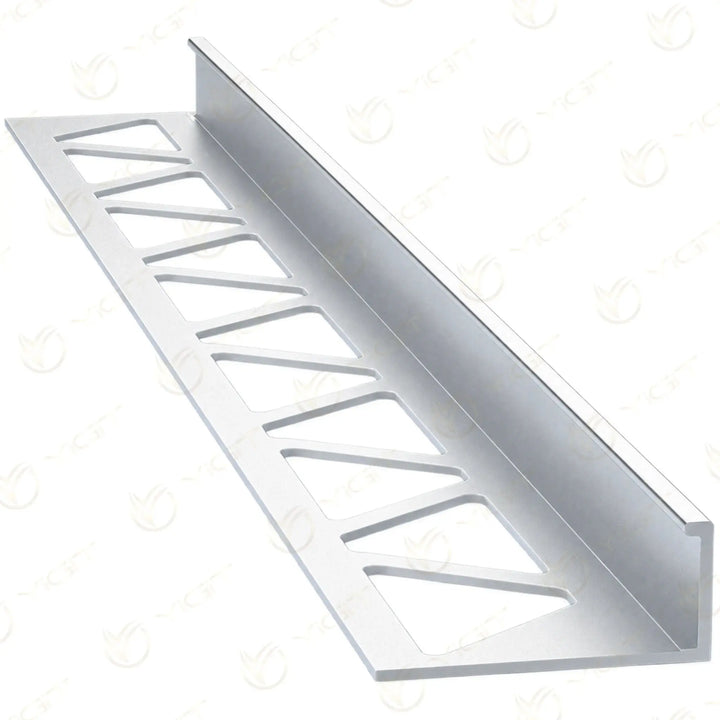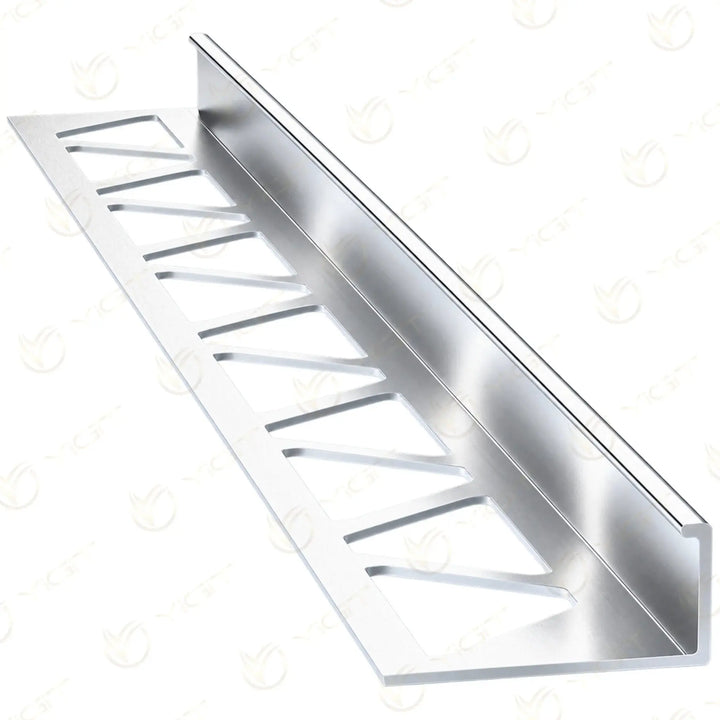


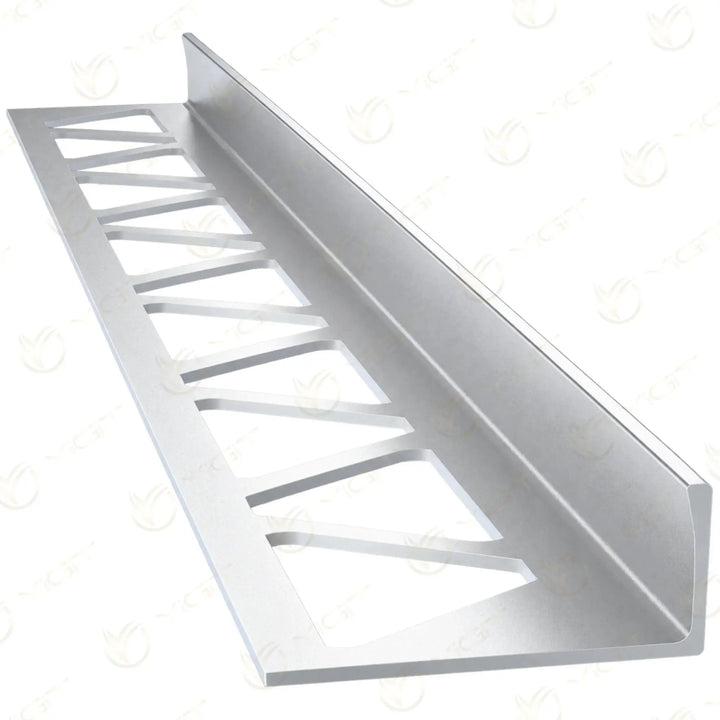
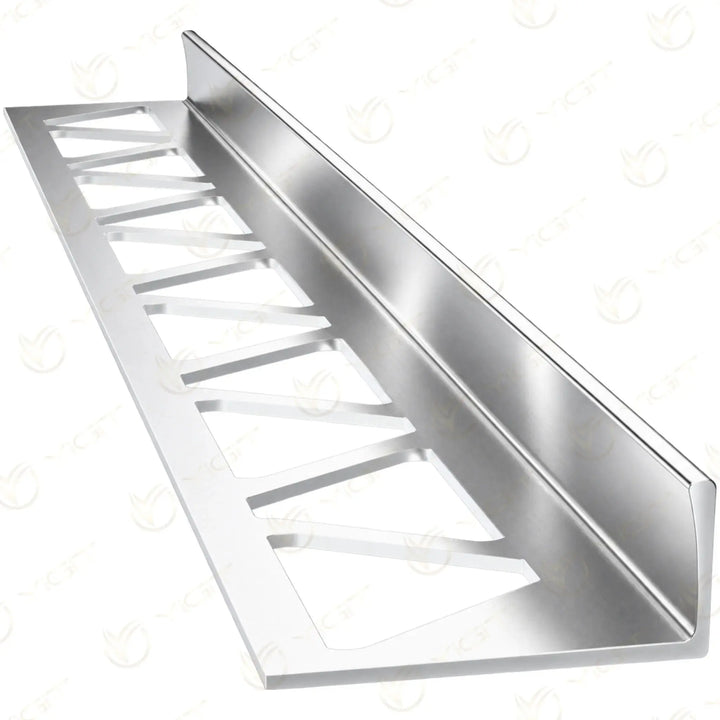
Tile profiles tidy up the corners, edges and transitions of tiled surfaces. The Yiğit Alüminyum collection includes outside and inside corner sections, right-angle and other shaped edge trim models, terrace and expansion joint profiles, and tile levelling parts. Choose the right solution by considering the tile thickness, the shape of the joint and the stage of tiling together.
Category guide
An aluminium tile profile is a construction detail that finishes the exposed edge of the tiling and defines the visible finishing line. When choosing a tile profile, look not only at the shape of the front face but also at the part the tile sits in and the fixing flange. Protecting corners, finishing edges and leaving room for movement in the surface are handled by different sections; one model does not replace another in every application.

A tile outside corner profile is considered for outward-turning joints, in forms such as square, oval, half-moon and lipped. A tile inside corner profile finishes an inward-turning joint between surfaces. The face height must be matched to the thickness of the tiling.
A tile edge trim profile is used on the free edge of the tiling. Right-angle, reverse square, Y and lipped options each form the visible metal line in a different way. The choice depends on the direction in which the edge is left exposed.
A terrace profile is considered for the special finishing detail at the edge of the tiling; an expansion joint profile addresses a different need in the joint area. In projects that require water drainage, waterproofing or movement capacity, the technical conditions of the chosen product must be verified.
The levelling clip and the levelling wedge are separate accessories that help align neighbouring tiles during laying. Tile thickness and the compatibility of clip and wedge are checked before work starts.
Take into account the actual thickness of the tile and the adhesive layer. Do not decide the profile height from the number in the product title alone.
Outside corners, inside corners and free edges need different sections. Assess the joint between horizontal and vertical surfaces using the technical section drawing.
Choose a square, rounded or flat metal edge together with the tile pattern. Keep the profile form and the finish option consistent throughout the same application.
For expansion joint or terrace applications, review the project conditions separately. Choose levelling accessories according to the tile thickness and system compatibility.
A tile corner profile is considered for returns in wall tiling, the edges of niches and the lines where the tiling ends. Where a tile edge profile is needed, the shape of the visible face and the tiling level are considered together. In special areas such as terraces and movement joints, choose the product and fixing detail the application requires rather than a general corner section.
The profile should be compared dry with the tile to be used, and the finished level checked. The flange that goes under the tiling is installed together with the relevant tiling system. Cuts and corner joints are planned in advance. The order in which levelling clips and wedges are fitted and removed should follow their own application instructions.
Decide on the corner or edge shape; match the model height to the tile thickness and the tiling level.
We use only essential cookies, which are needed for the site, the cart and your order to work. For details, see: Cookie and Explicit Consent Notice