


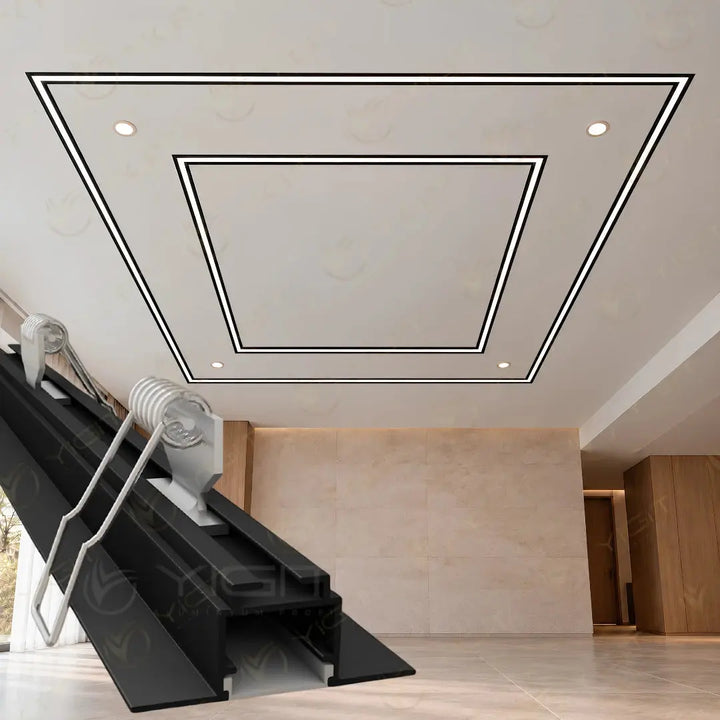
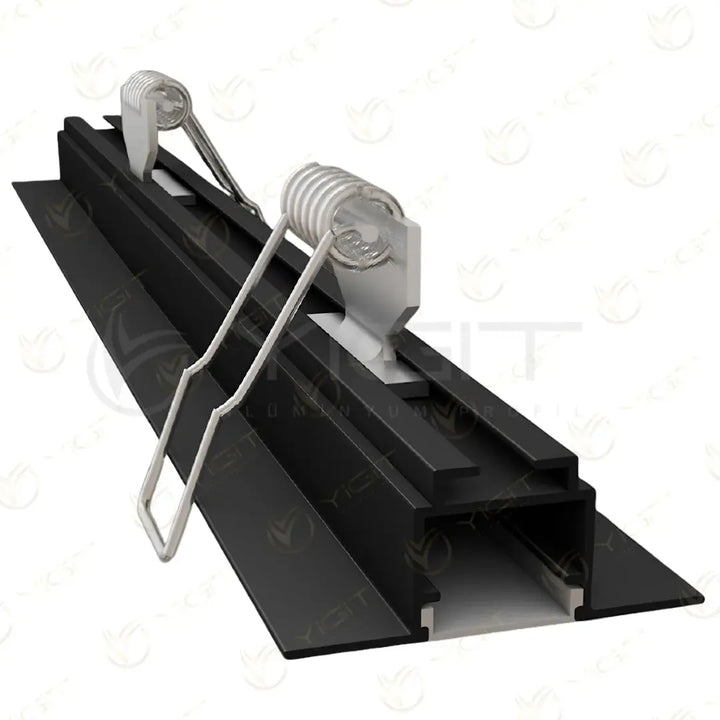
Slim LED profiles are used for recessed light lines on plasterboard surfaces that are finished with a thin edge frame. The Yiğit Alüminyum collection includes Slim models in different sections and a spring-clip installation option. When choosing a plasterboard LED profile, compare the opening to be cut, the visible frame and the internal channel that will hold the LED strip together.
Category guide
A Slim LED profile is an aluminium lighting section whose body sits in the prepared opening while its edge frame remains visible on the surface. In applications that call for a thin-frame LED profile, this edge forms the finish around the plasterboard cut-out. The outer width of the profile, the width of the recessed body and the usable LED channel are different dimensions. The installation opening should be planned from the body dimension on the technical drawing.

The 1.5 cm Slim LED profile is among the narrow-section options in the collection. The visible light line and the proportion of the frame are assessed together on the ceiling or wall where it will be installed. The value in the model name should not be used in place of the clear width that the LED strip will fit into.
The models named 2.2 cm, 2.5 cm, 3.2 cm and 5 cm offer different sections. When choosing a wide Slim LED profile, the recess depth and the void behind the plasterboard should be checked in addition to the light surface.
The spring-clip Slim LED profile differs from the other models in its fixing detail. The space in which the springs will open and the board thickness should be reviewed together. This installation feature should not be generalised to all Slim profiles in the collection.
The cover used with a recessed LED profile is chosen to suit the seating structure of the section. Strip width, LED layout and channel depth together affect how the visible light line is formed.
Take the opening width from the recessed body of the profile. The overall width of the outer frame should not be used as the cutting dimension.
Plasterboard thickness, the position of the framing members and the channel depth are compared. On the spring-clip model, working space is also left for the fixing parts.
Decide the diffuser width you want on the ceiling or wall. The same model name does not guarantee the same light appearance in every project; the LED and cover are assessed together.
Resolve the supply line, the driver location and the ability to open the cover at the design stage. Preserve the access needed after the body has been fixed.
A plasterboard ceiling LED profile can be considered for corridors, work areas and decorative ceiling lines. For vertical lines planned as a plasterboard wall LED profile, the direction of the section and access to connections are also important. The choice of a Slim recessed LED profile sets both the thin edge that will remain visible on the surface and its proportion to the light line.
Before cutting, the opening dimension and fixing points are determined from the technical drawing of the profile. The plasterboard edges are prepared cleanly; the seating of the profile frame on the surface is checked. On the spring-clip model, the movement of the springs must not be obstructed. The LED strip and cover are fitted in the way that suits the section; electrical connections and maintenance access are kept in view throughout the installation.
Identify the suitable Slim section by comparing the frame width, the recessed body and the installation method.
We use only essential cookies, which are needed for the site, the cart and your order to work. For details, see: Cookie and Explicit Consent Notice


