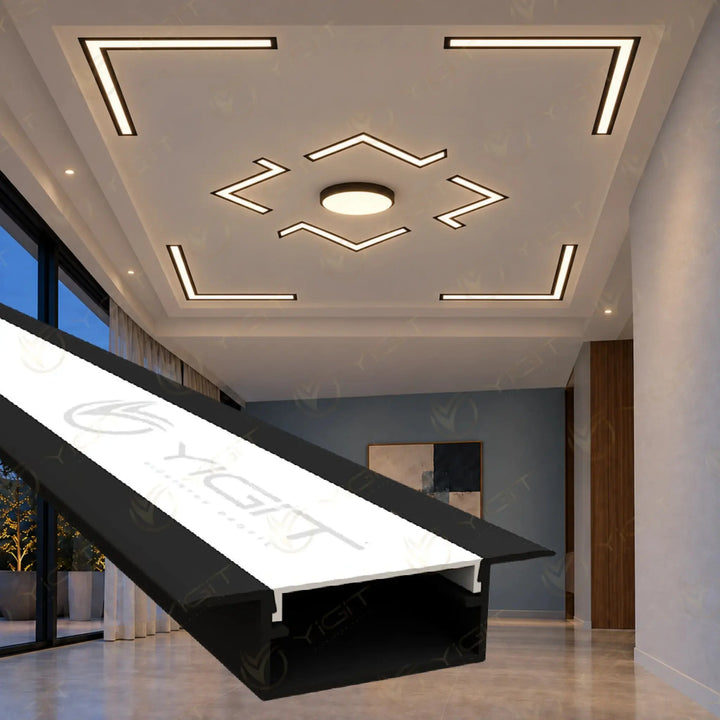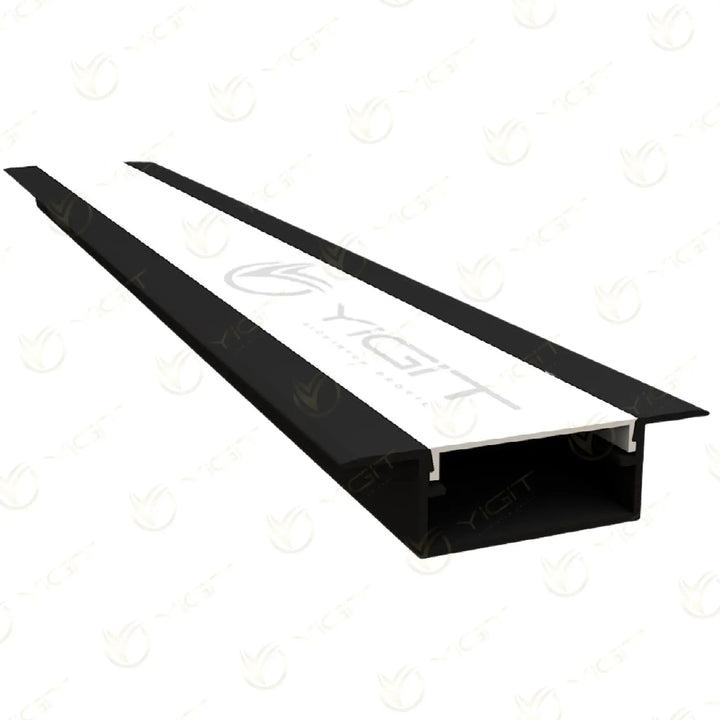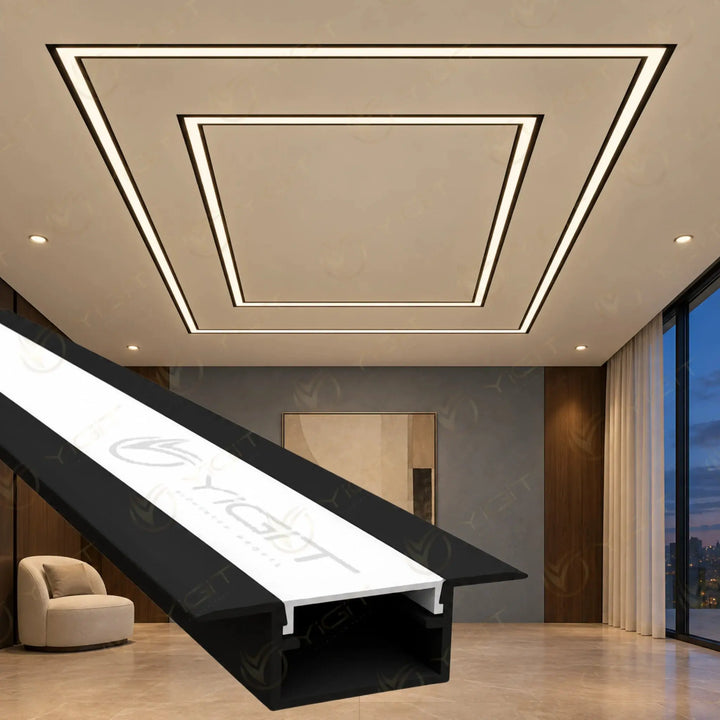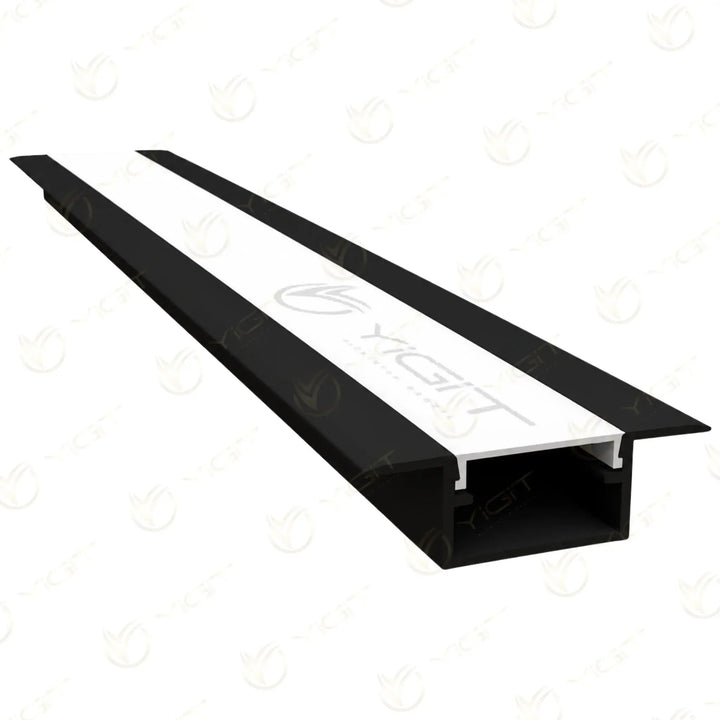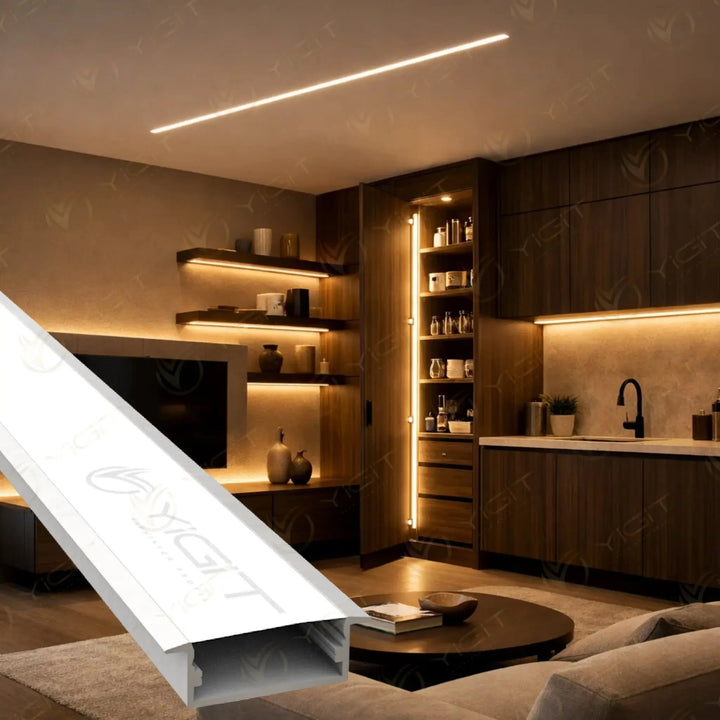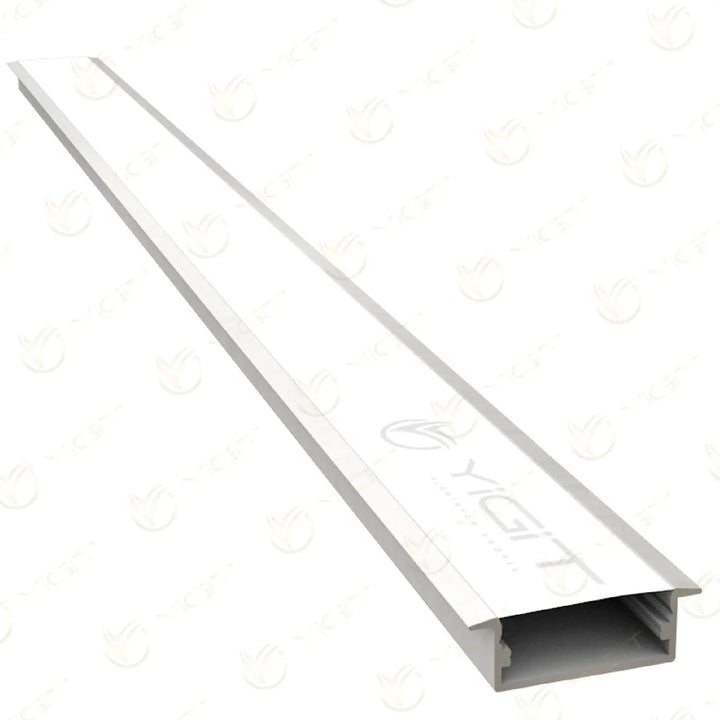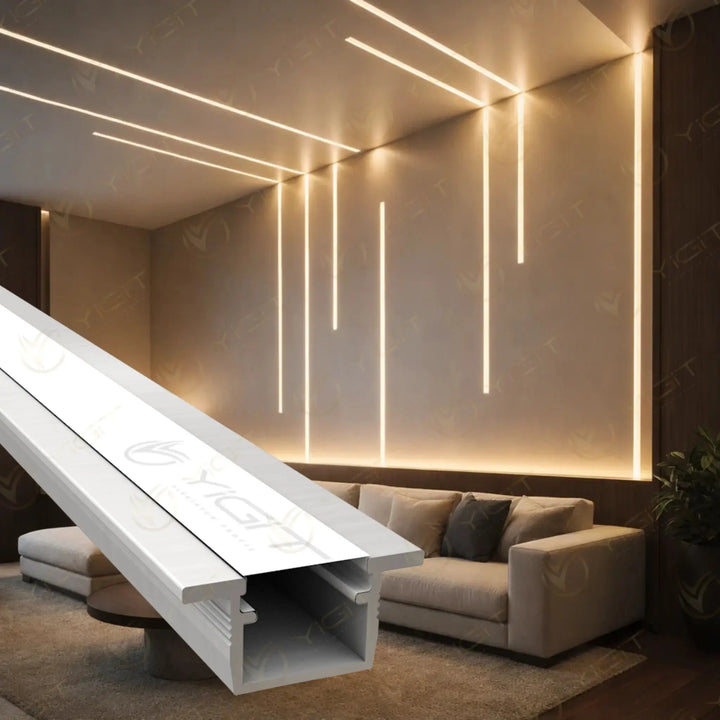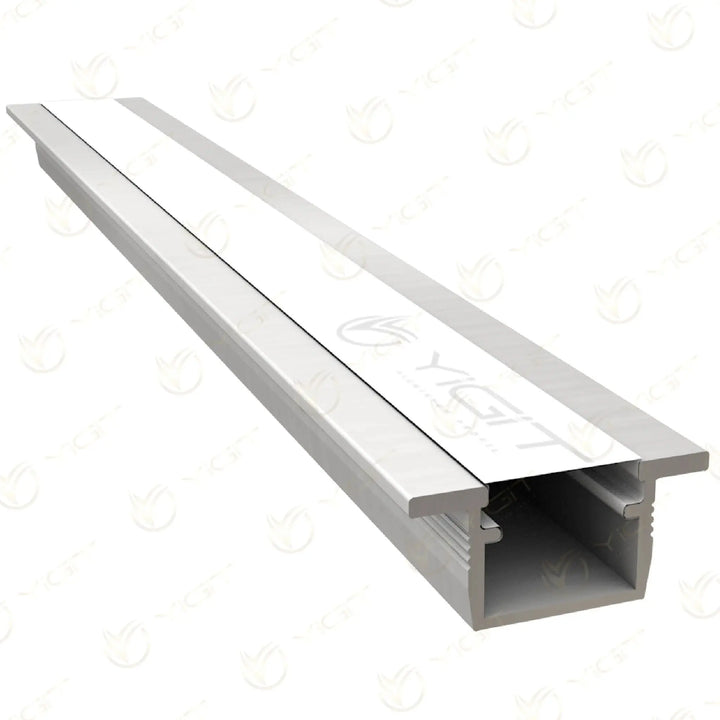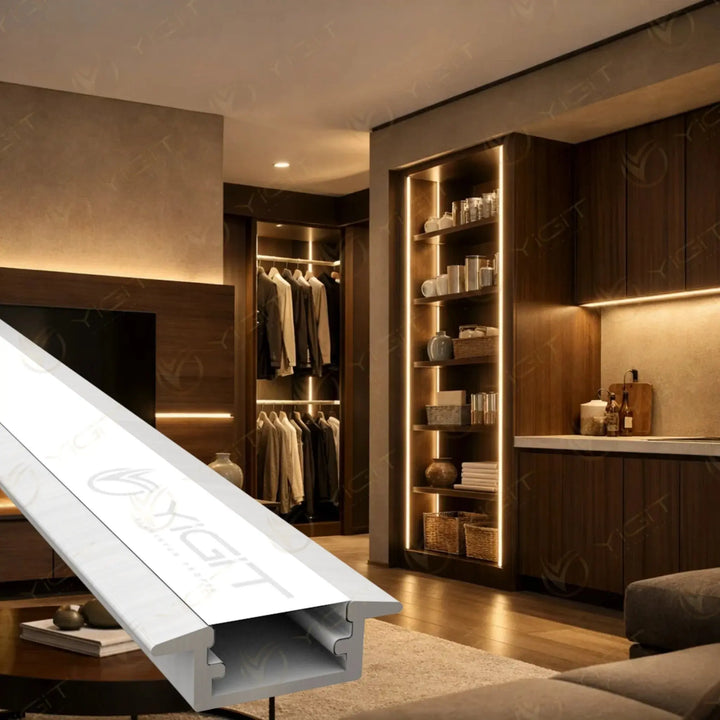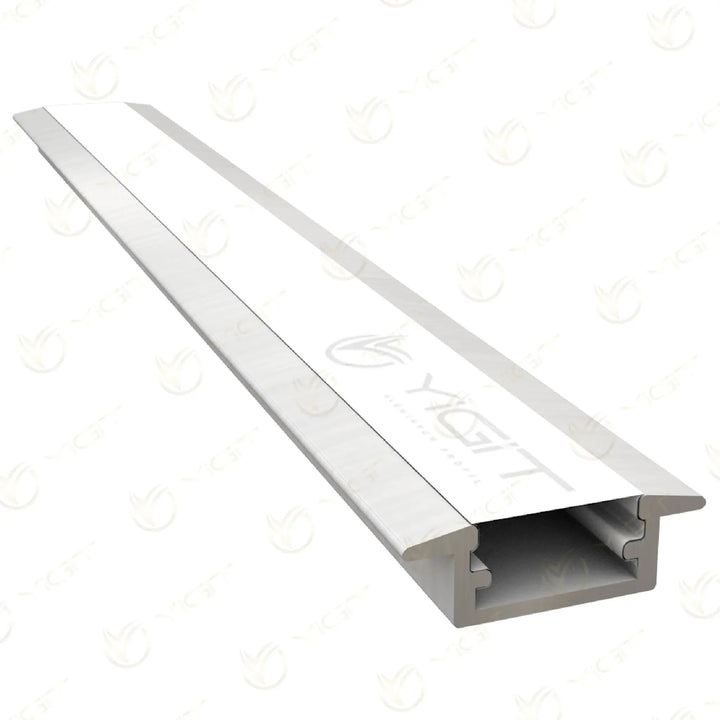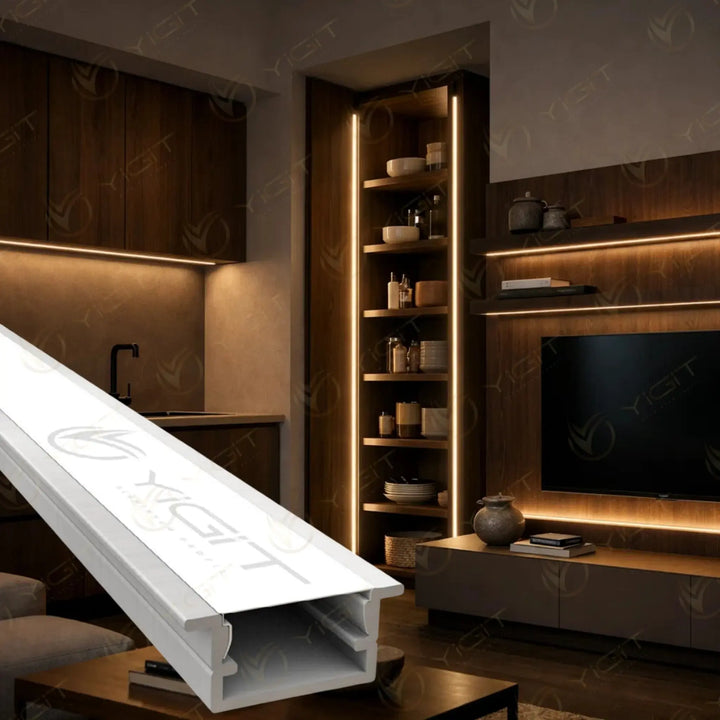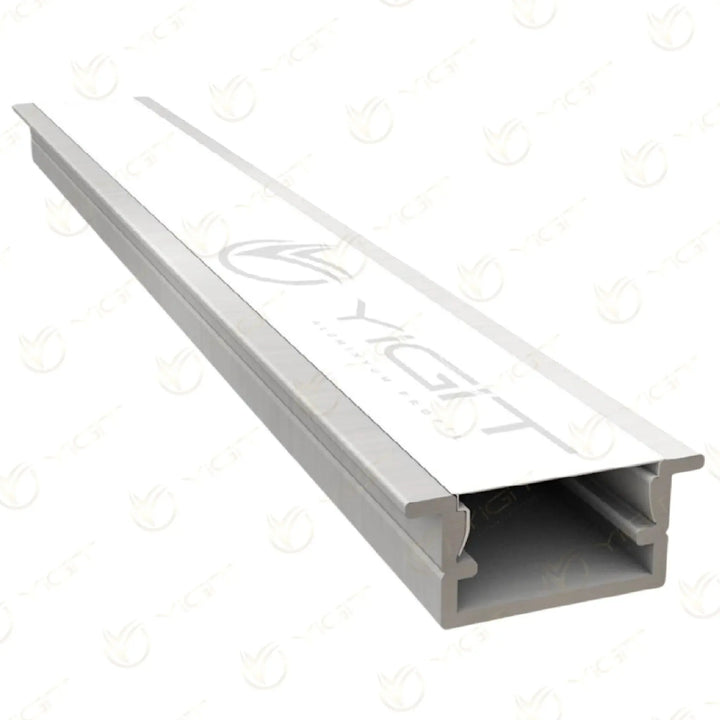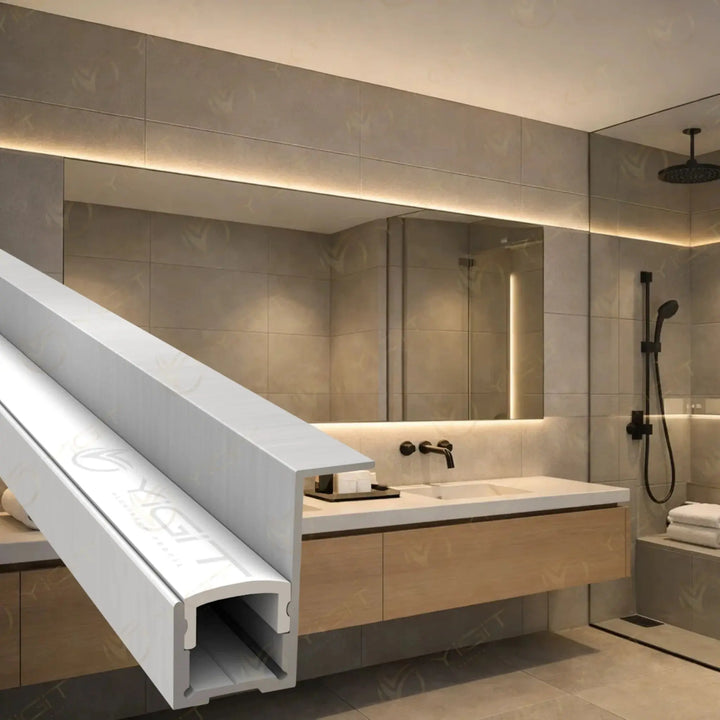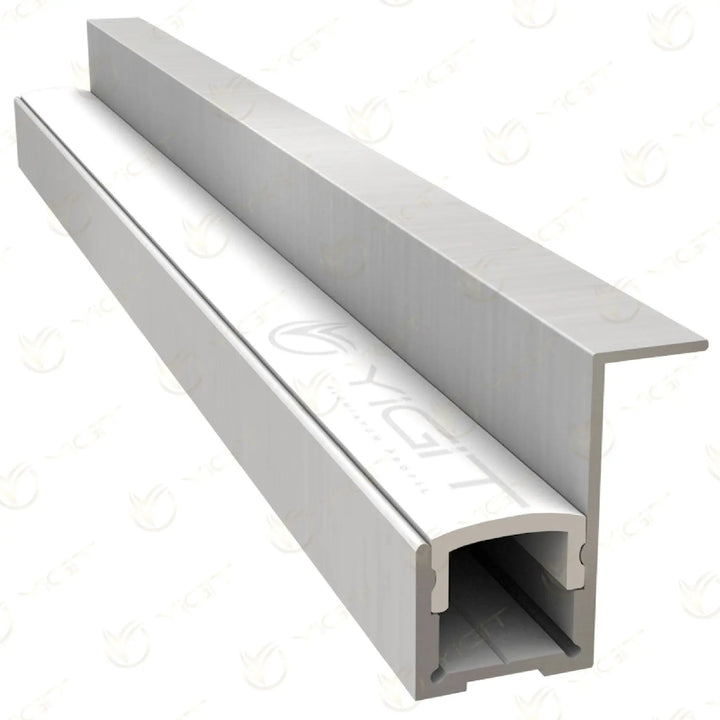


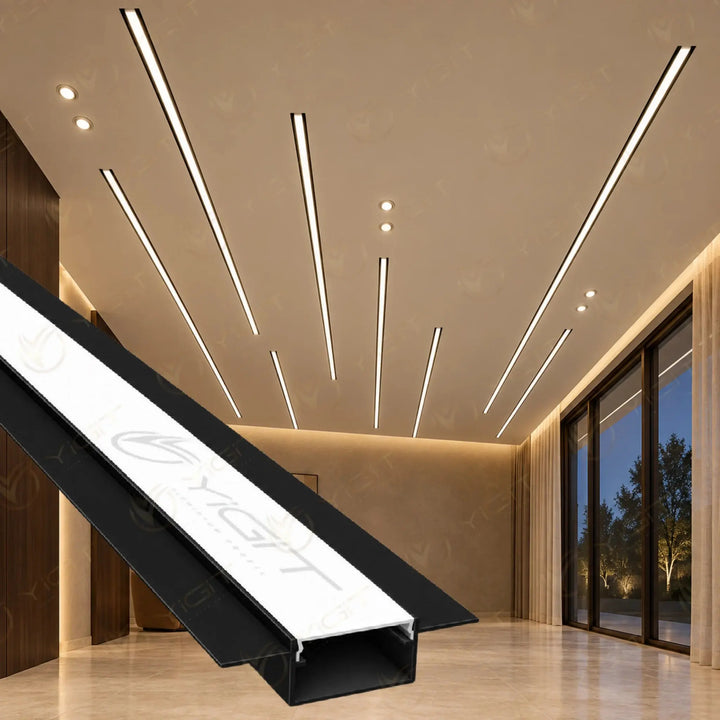
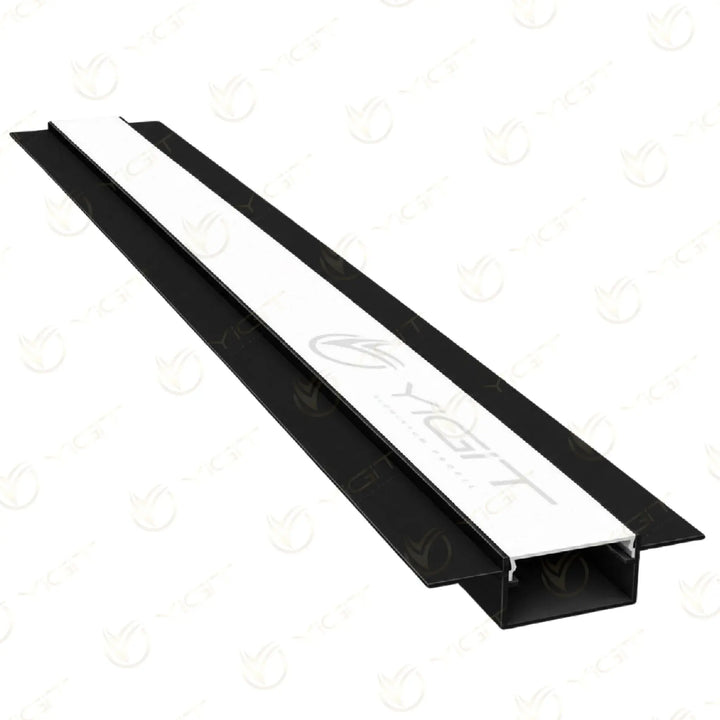
Flanged LED profiles finish a body that sits in a routed channel with edge flanges that remain visible on the surface. The Yiğit Alüminyum collection includes recessed models in different sections and a hidden corner option. When planning recessed lighting in furniture or cladding, assess the channel depth, the body width and the area the flanges will cover on the surface together.
Category guide
A flanged LED profile forms a seat for the LED strip while its side flanges cover the edge line of the channel. When choosing an aluminium recessed LED profile, the overall width of the profile and the width of the groove to be cut in the surface should be read separately. The fact that the flanges stay on top of the surface is what defines the installation of these sections; not every flanged model creates a Trimless detail that disappears beneath the plaster.

The sections named 7×13 and 7×22 can be compared for narrow LED lines. Whether the usable channel suits the LED strip is confirmed from the technical drawing. The model name does not by itself state the LED strip width.
The model names 10×23, 10×36 and 10×50 distinguish different flanged sections. When choosing a recessed LED strip profile, the fit of the body in the cut-out should be checked in addition to the visible flange span.
The 12×24 and 12×45 models are reviewed according to the depth and width required. The space left between the LED and the diffuser inside the channel is assessed together with the lighting components to be used.
The flanged hidden corner LED profile offers a corner arrangement that differs from the models that sit in a flat surface. The surface the section will be fixed to, the direction of the flange and the position of the light opening should be planned together.
Work from the dimension of the recessed body, not the overall flange span. The channel tolerance and cutting method are set by the technical detail of the chosen model.
Check the thickness of the surface where the furniture LED profile will be used. Enough material and connection space must remain behind the channel to be cut.
The LED strip width, the channel depth and the way the diffuser cover seats are matched. Covers of similar width are not assumed to fit every body.
Resolve in advance the point where the LED supply will enter and how the profile will finish at the end. Take into account connections that will be harder to reach once the channel has been cut.
In applications that call for a wardrobe interior LED profile or a shelf LED profile, sections suited to cutting a channel in the surface can be considered. A flanged recessed LED profile is chosen together with the edge finish of the shelf, display cabinet or decorative cladding detail. For the corner model, the junction geometry required by the product is used as the basis instead of a straight channel.
The profile section should be compared with a short trial piece before the surface is machined. Alignment and depth are maintained along the channel; the flanges are checked to make sure they sit flat on the surface. The fixing method is chosen to suit the body and the substrate. The position of the LED and cover and access to connections are checked again at the end of installation.
Compare the cut-out, the overall flange span and the usable LED channel on the same technical drawing.
We use only essential cookies, which are needed for the site, the cart and your order to work. For details, see: Cookie and Explicit Consent Notice