

Screed and straightedge profiles bring together the aluminium sections used in plastering to set a reference line and level the surface plane. The Yiğit Alüminyum collection includes Ano, blade, box, H and reinforced straightedge models. Consider the right section according to the width of the surface to be worked, the straightedge length and the way it is held.
Category guide
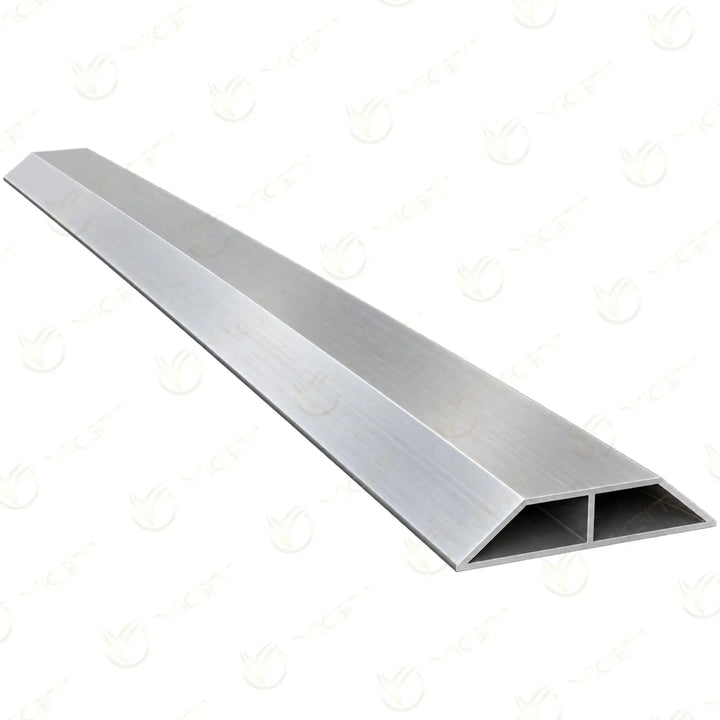
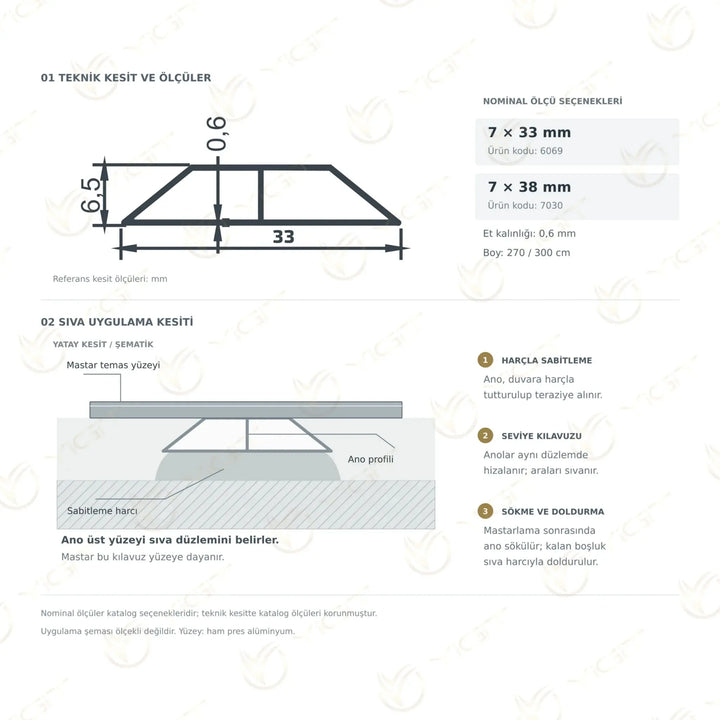
The Ano (screed guide) profile forms the guide line that the plaster follows. The aluminium straightedge profile works on these lines or on the application surface, helping to remove excess mortar and check the plane. The Ano guide strip and the straightedge perform different jobs; where they are used together, the guide spacing, the plaster thickness and the working length should be planned in advance.

The plaster Ano (screed guide) profile is considered for reference lines set to the same plane on the surface. The spacing and the target plaster level are determined by the way the straightedge will be worked.
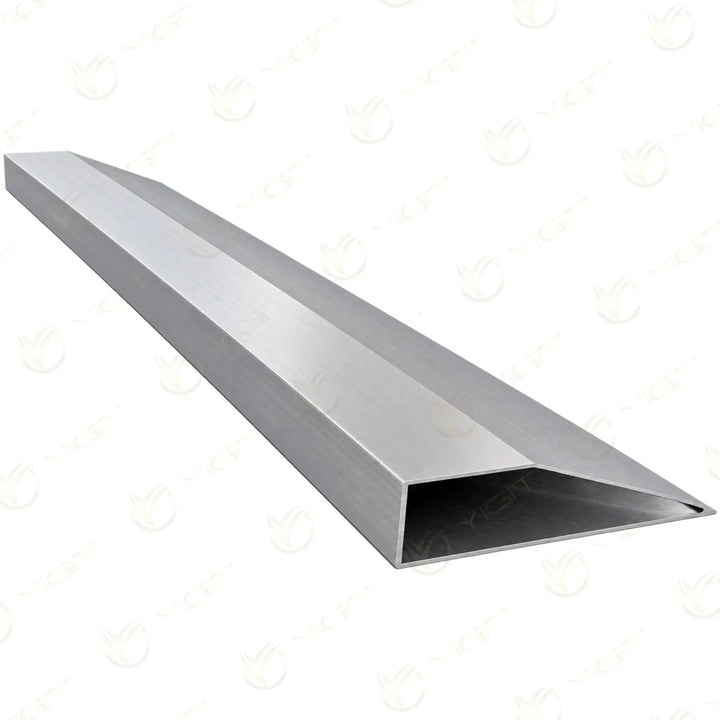
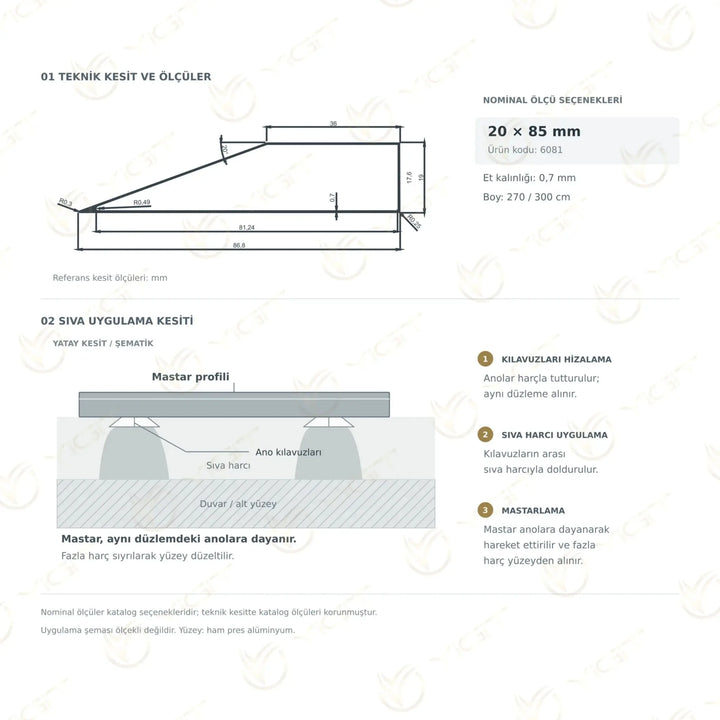
The blade straightedge profile and the reinforced blade straightedge are used to level the plaster surface with their tapered working edges. In the reinforced model the internal section is different; the body, length and grip are compared together.
The box straightedge profile and the reinforced box straightedge have a rectangular body. The flat outer faces form the working line. The internal reinforcement and the profile length should be checked from the drawing for the chosen model.
The H straightedge profile is considered for its H-shaped section and its lengthwise working edges. The area for gripping the body and the edges in contact with the surface are considered together with the plasterer's working movement.
Determine the surface width and the distance between the guides. Choose a working length that lets the straightedge sit properly on two reference lines.
Compare blade, box and H sections in terms of how they are held and how they contact the surface. Product length and section should be assessed together.
Setting the Ano guide strips to the same plane is the basis of surface control. The plaster thickness and the existing condition of the wall affect the reference lines.
The straightness of the working edge must be preserved during cutting, transport and use. A surface that is bent or covered in mortar residue can make checking dimensions harder.
A plaster straightedge is considered for levelling fresh mortar on walls and other suitable surfaces. A gypsum straightedge should likewise be chosen according to the material to be applied, the surface width and the working movement. Setting the reference line with the Ano profile and levelling with the straightedge are treated as separate steps in the application plan.
First the target plane is determined and, if necessary, the Ano lines are set to the same level. The straightedge is used resting evenly on the surface or on the guides. Excess mortar is removed in stages and the plane is checked from different directions. At the end of the job the working edges are cleaned by a suitable method; avoid any forcing that would affect the accuracy of the profile.
Compare Ano and straightedge sections according to whether you need to set guides or level the surface.
We use only essential cookies, which are needed for the site, the cart and your order to work. For details, see: Cookie and Explicit Consent Notice