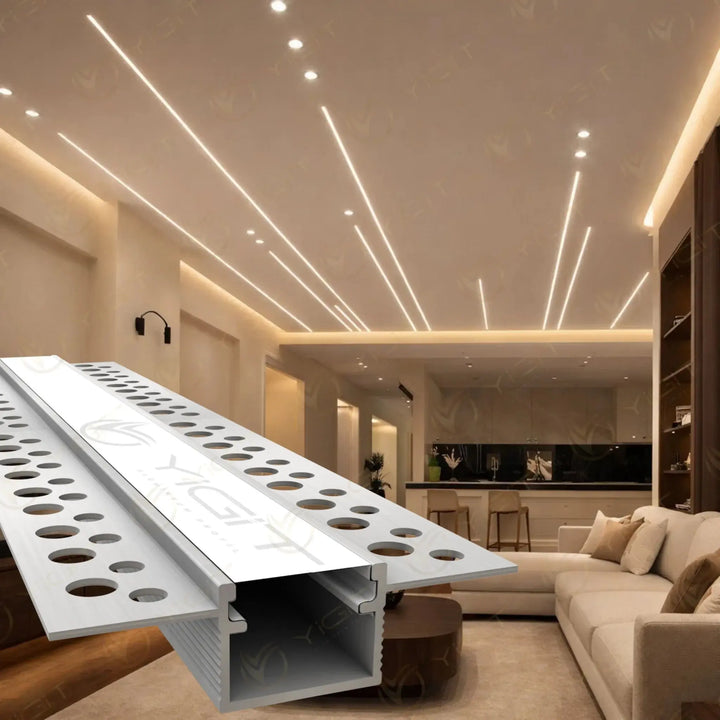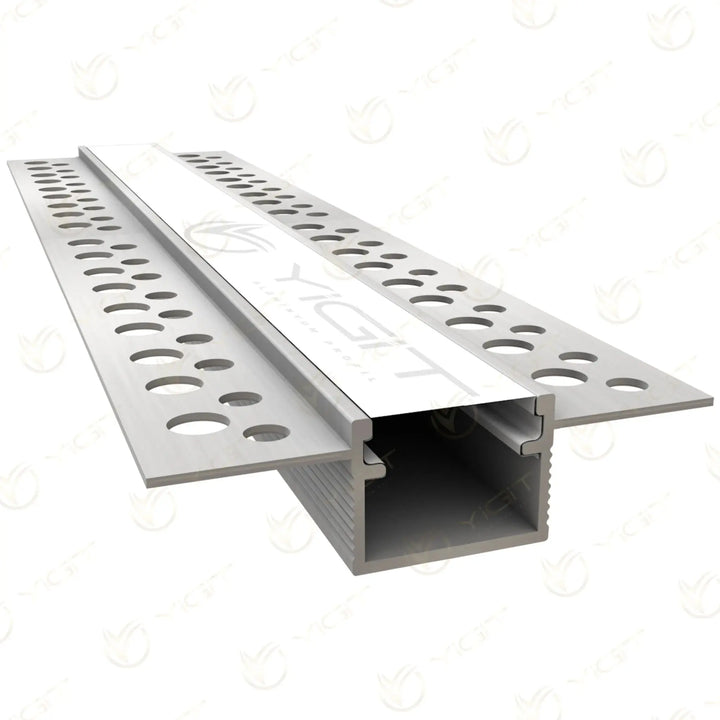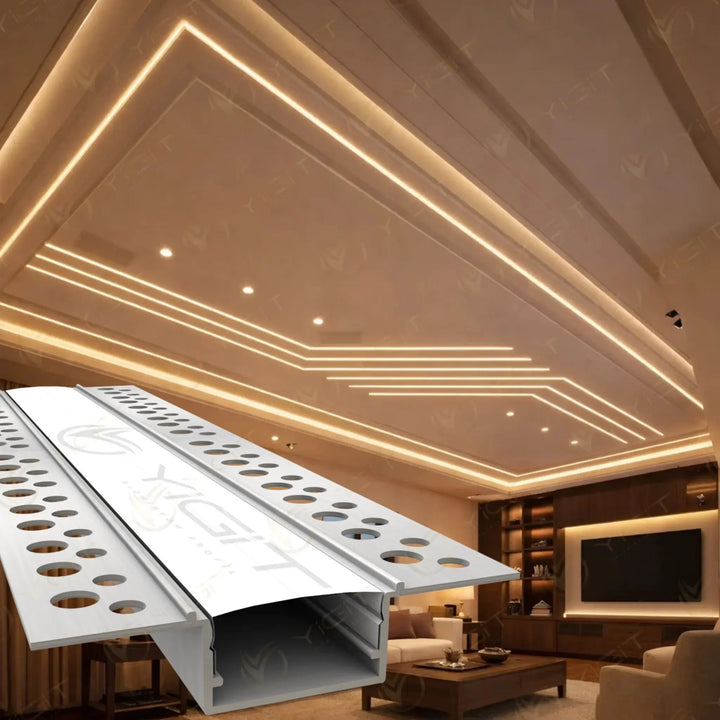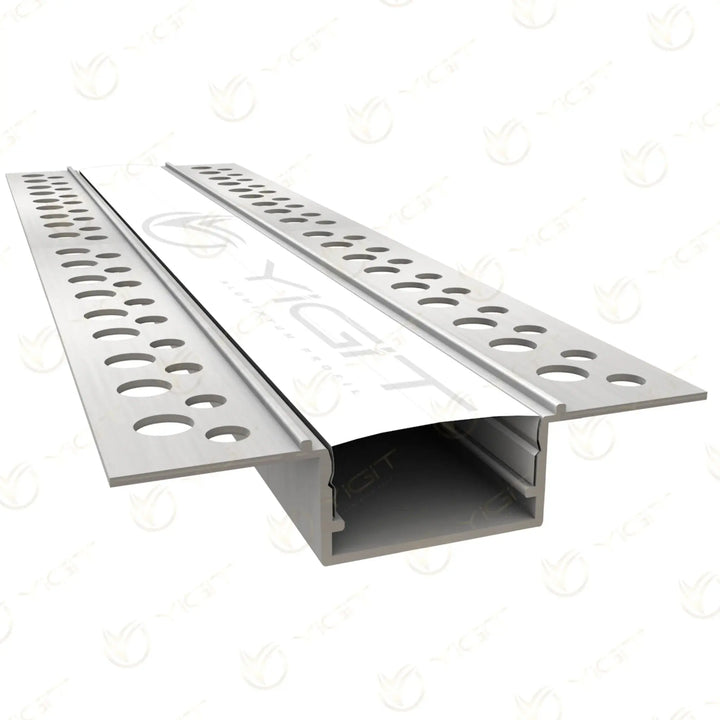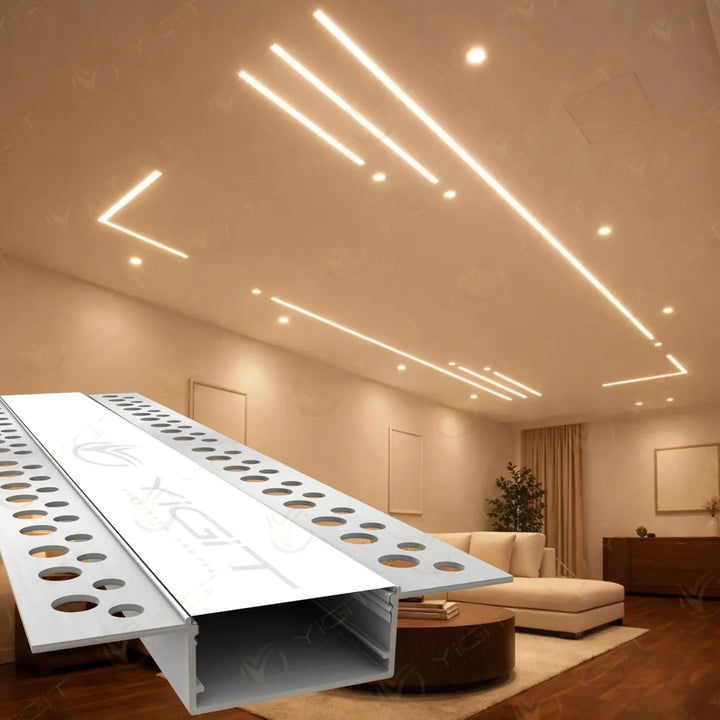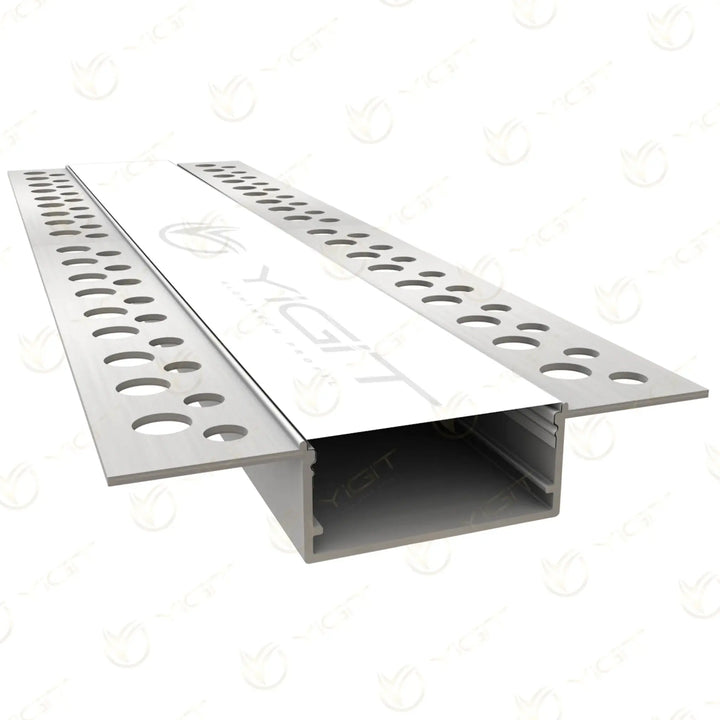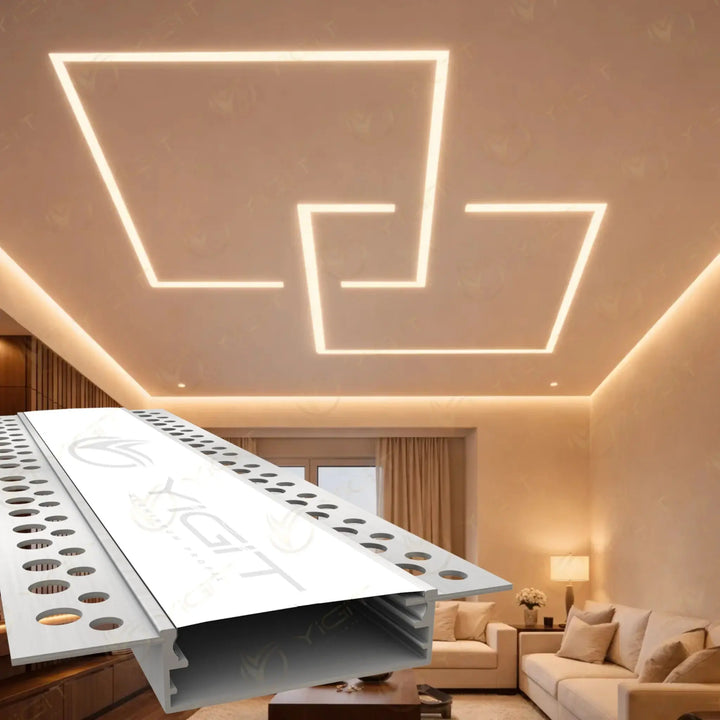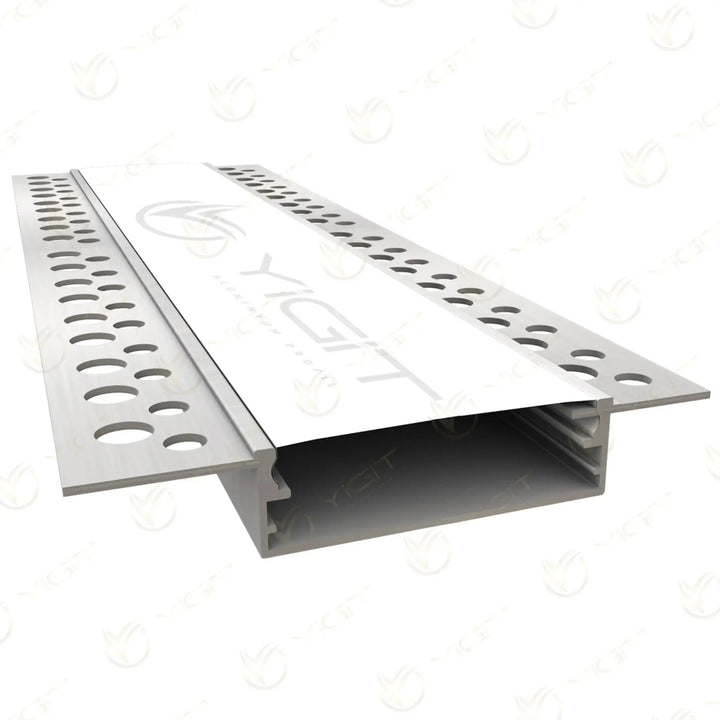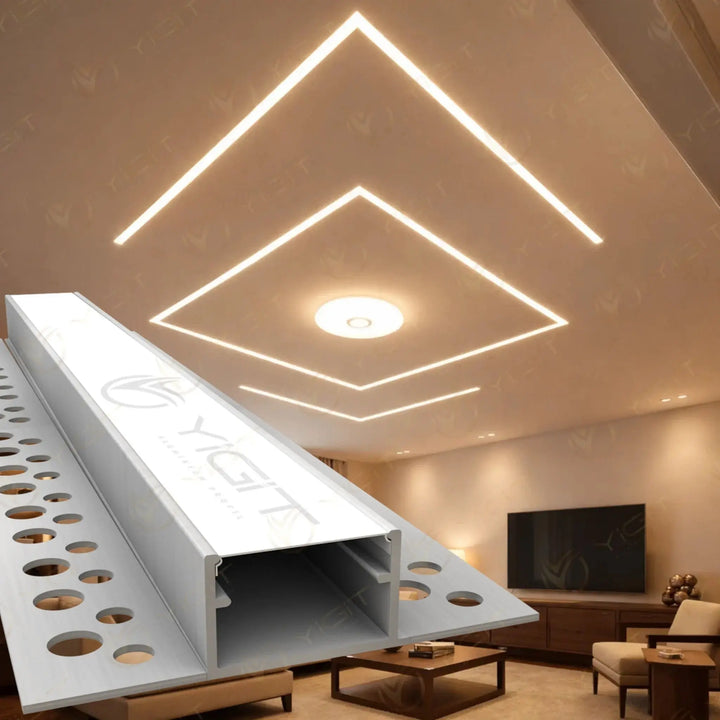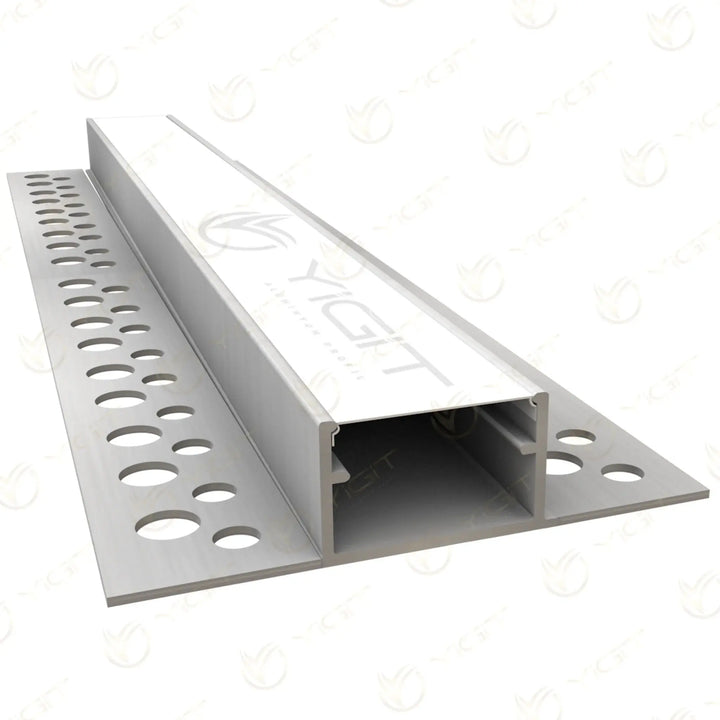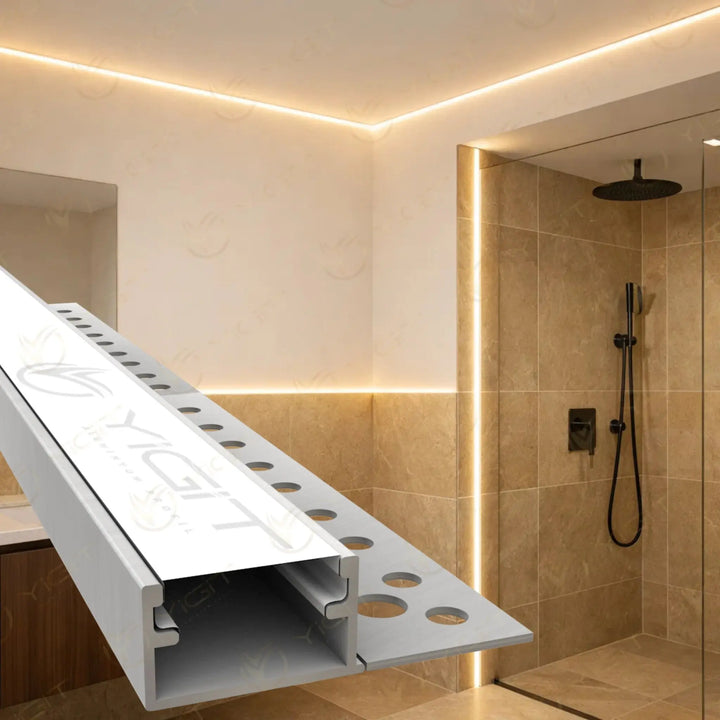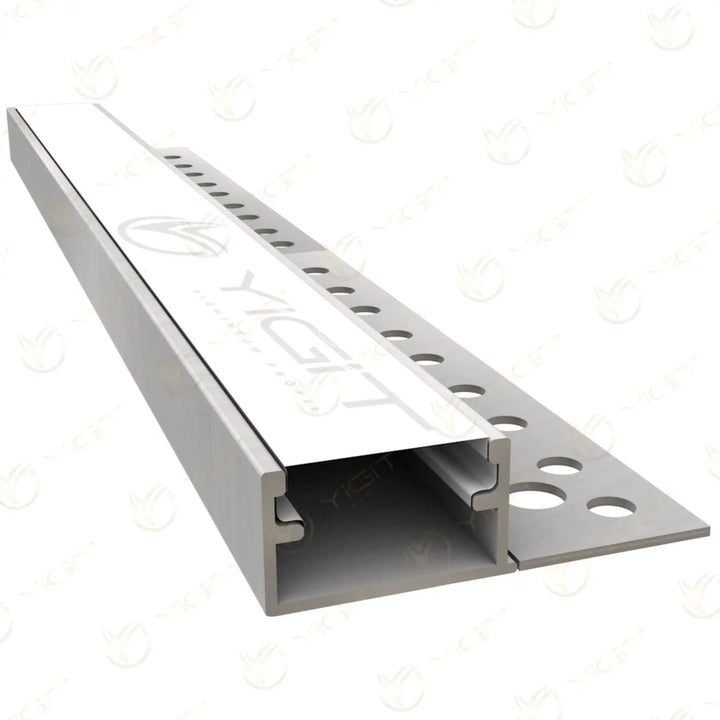


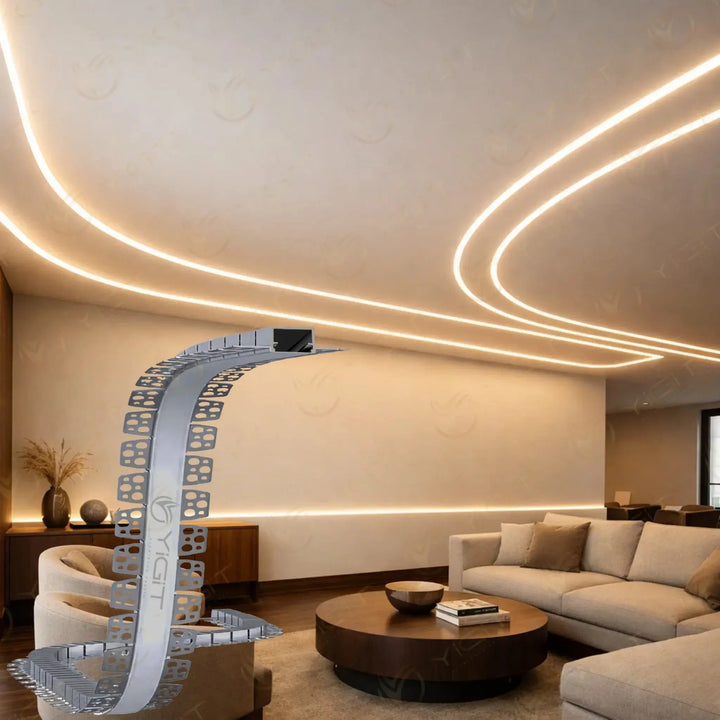
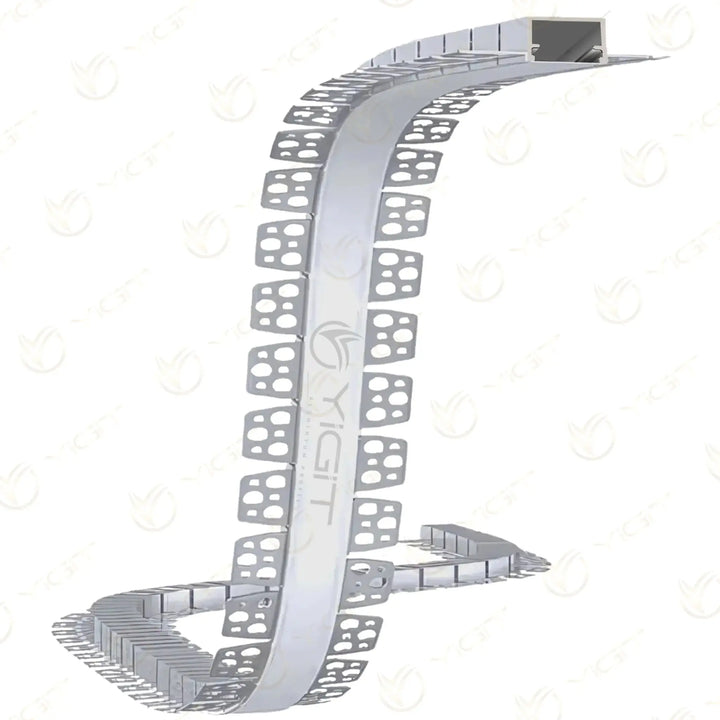
Trimless plasterboard LED profiles are used to create frameless light lines that sit flush with the surface of ceilings and walls. The Yiğit Alüminyum collection includes different sections for straight, flexible, reverse and corner applications. When choosing a recessed (plaster-in) LED profile for your project, assess the installation surface, the usable LED channel and cover compatibility together.
Category guide
A trimless LED profile is an aluminium profile that forms a channel for the LED strip and whose flanges stay beneath the plaster in a plasterboard application. Also called a frameless LED profile, this construction brings out the light line on the finished ceiling or wall. For a straight line, a curved design or corner lighting, the section of the profile and the installation method must match the project.

The models in the collection named 1.5 cm, 2.2 cm, 2.5 cm, 3.2 cm and 5 cm help in planning straight light lines in different sections. These model names should not be taken as the usable internal width for the LED strip; the selection is made from the technical drawing.
The 1.5 cm flexible model is considered for curved lighting designs in arc and wave shapes. The forming direction of the profile, the curve of the application and cover compatibility should be checked together. It should not be assumed that the rigid-body models have the same bending capability.
The 1.8 cm and 2 cm reverse models and the single-flange reverse model offer options for different channel positions and surface junctions. The position of the light output, the flange structure of the profile and the surface it will be fixed to should be compared on the application section.
The trimless inside corner LED profile is considered for junctions that turn inwards, and the trimless outside corner LED profile for corner details that turn outwards. The geometry of the corner and the direction of the light should be planned together with the model to be used.
Body width, overall flange span and installation height are different dimensions. Check the space the LED strip will fit into against the usable internal channel.
Decide the width of the line you want on the ceiling or wall. Do not treat the outer dimension of the profile and the visible diffuser surface as the same dimension.
Strip width, LED layout, channel depth and the diffuser cover should be assessed together. The uniformity of the light depends on these components; a short sample installation allows the appearance to be checked.
Review the plasterboard thickness, the framing layout and the corner junctions together with the project. For the Tile Inside Corner LED Profile in this category, the tile cladding detail should be assessed separately.
In projects looking for a plasterboard ceiling LED profile, linear lighting can be planned on living room, corridor, office and shop ceilings. In plasterboard wall LED profile applications, niches, vertical light lines and wall junctions come to the fore. The flexible model is chosen for curved designs, and a suitable corner section for junctions that change direction. Each linear lighting profile should be considered together with the surface it is applied to and the intended light appearance.
The position of the profile should be decided before the plasterboard is cut and the finishing work begins. The channel geometry and the seating of the cover need to be protected during fixing, plastering and painting. The power requirement of the LED strip, the driver location and maintenance access should be added to the application plan. Working from the technical drawing and installation notes for the model to be used helps the surface finish and the lighting line to be resolved together.
Compare the straight, flexible, reverse and corner models according to the direction of the application. Complete the final selection using the technical drawing of the product, the LED channel and cover compatibility.
We use only essential cookies, which are needed for the site, the cart and your order to work. For details, see: Cookie and Explicit Consent Notice