


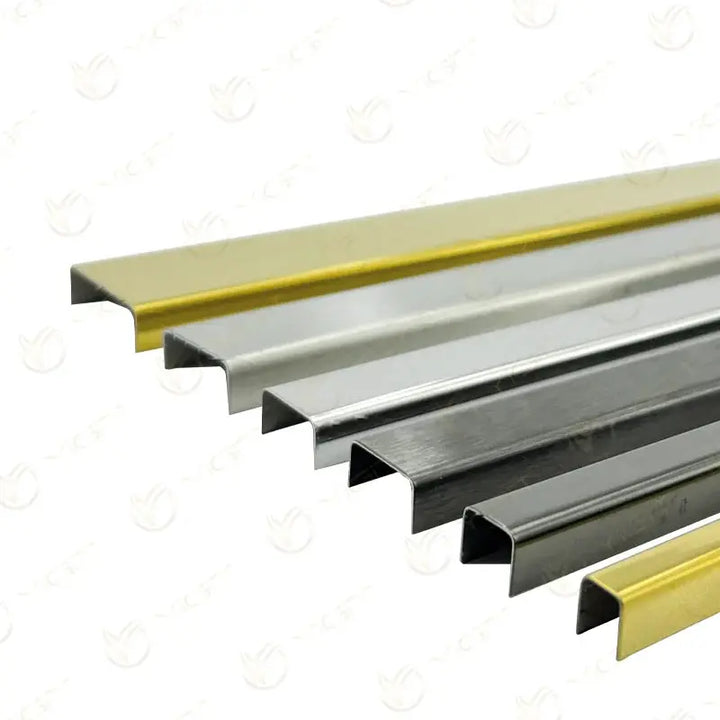
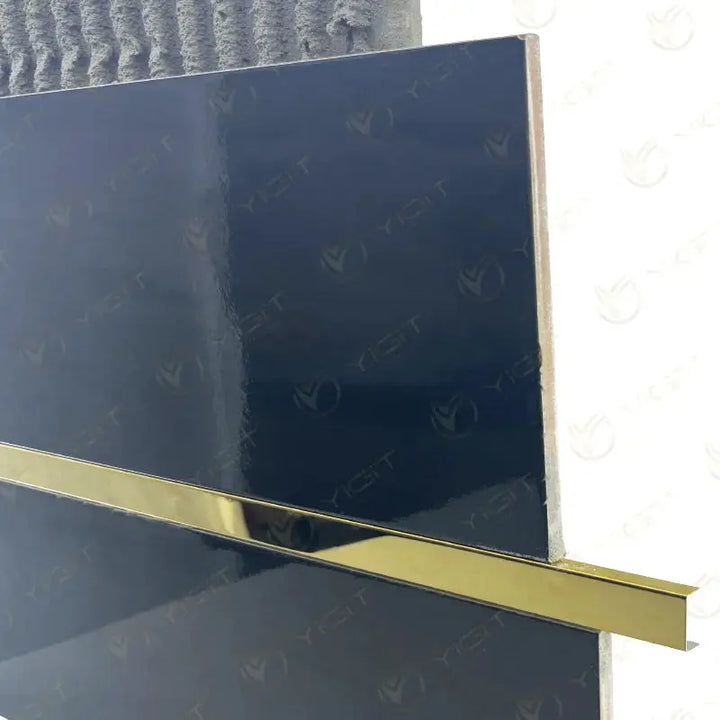
Stainless steel border profiles create a linear division on tile and decorative covering surfaces. With the plain border, patterned border and crystal-stone border models, different metal surface effects can be achieved in the same application. Make the choice together with the covering pattern and the visible width of the border.


Stainless Steel Border Profiles
Price on request
Category guide
A stainless steel border is considered for creating a decorative line within a covering or between two covering areas. A plain face gives a simple strip effect, while patterned and stone-set faces make the line more pronounced. The rear section of the model and its relationship to the covering level should be reviewed as much as its surface form.

The stainless steel border profile, with its uninterrupted metal face, creates a plain line between tile courses and decorative areas.
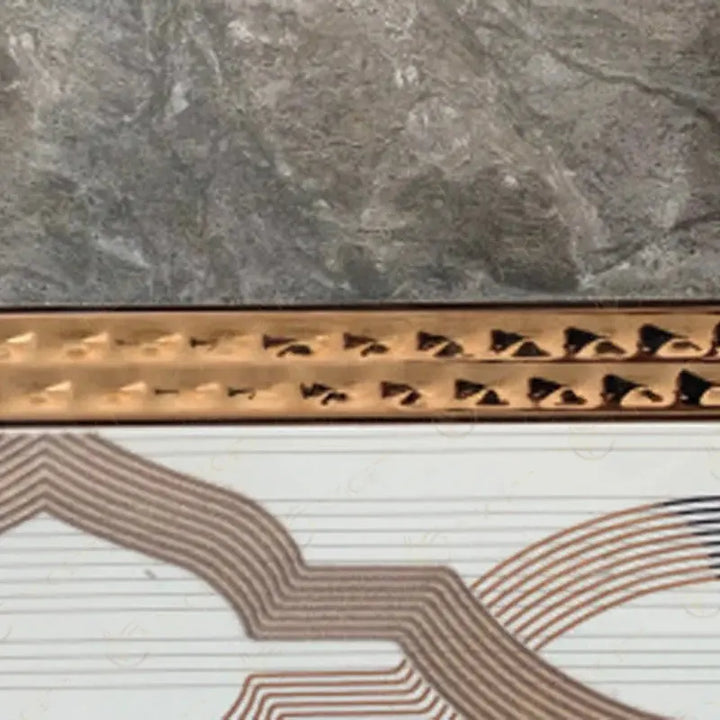
The patterned stainless steel border brings out the surface texture. The pattern direction and the joints should be planned to follow the same order throughout the application.
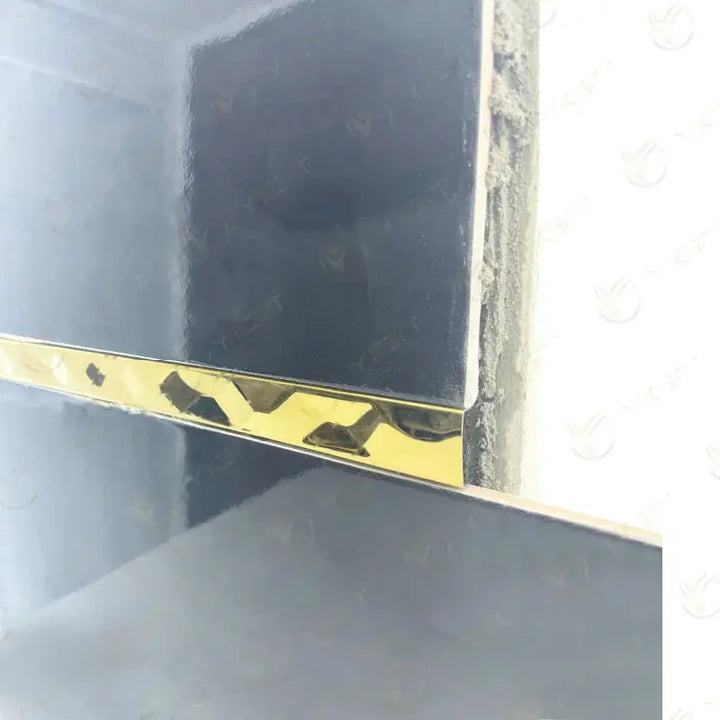
The crystal-stone stainless steel border offers a more emphatic decorative line with its stone-set visible face. Cleaning and fixing conditions are assessed according to the selected surface.
Choose the visible width of the border according to the tile size and the arrangement of lines in the space.
Compare the plain, patterned or stone-set model together with the covering's own pattern.
Check before installation how the rear section and the visible face meet the covering.
Use products suitable for the metal surface and, where present, the stone-set surface. Do not assume chemical resistance that is not verified in the source.
The tile border profile is considered for horizontal or vertical decorative lines in wall coverings. The decorative metal border can be considered, depending on the design, around niches, on feature walls and in areas where different surfaces meet. Maintenance and fixing conditions should be verified separately for the environment in which the stone-set face will be used.
The border line is determined together with the covering layout; the cutting and joint points are marked out. On patterned faces, continuity of direction is maintained. A fixing method suited to the rear form of the model is chosen, and the decorative face is protected against scratching during the work.
Determine the function of the joint; compare the covering and the profile section against the finished surface dimensions.
We use only essential cookies, which are needed for the site, the cart and your order to work. For details, see: Cookie and Explicit Consent Notice