Our production line

Nine stations from die to shipping

From the die shop to shipping: the production and finishing stations we plan for your profile, and what we look at and check at each one.

Production route

Which stages does a profile go through?

We produce standard and custom aluminium profiles for the needs of different industries. From die design to extrusion and from surface treatment to shipping, we handle every stage of production according to the technical requirements of the product.

We plan the right production process by assessing the technical drawing, the application and the order requirements together. We work towards dimensional accuracy, surface quality and consistency in repeat orders.

Not every profile goes through every process. Anodising and electrostatic powder coating are alternative surface options. Whether machining and punching are done before or after coating, and whether taping and individual wrapping are needed, is planned according to the product’s technical requirements.


  1. Die shop

    The dimensional accuracy, function and production consistency of an aluminium profile start with a correctly designed die. Alongside standard profile requirements, we also assess custom section requests based on our customers’ technical drawings and intended use.

    Die shop
    Die shop

    Technical drawing and manufacturability

    The profile’s outer dimensions, wall thicknesses, hollows and connection details are reviewed together with the system it will be used in. Narrow channels, thin walls and differences in thickness within the section are assessed for manufacturability. The requested tolerances and surface requirements are agreed at this stage.

    Metal flow in die design

    The die geometry is designed so that the aluminium flows evenly across the section. The structure of the section, the selected alloy and the extrusion conditions are assessed together in the design, and the effect of later surface treatments on fit and connection dimensions is also taken into account.

    Trial production and section inspection

    Profile samples taken from trial production are compared with the technical drawing. Critical dimensions, wall thickness distribution, straightness and surface appearance are assessed, and die corrections and process adjustments are made where necessary.

    Die maintenance and repeat production

    Wear and build-up that occur during use can affect the profile’s dimensions. Cleaning, inspection and maintenance of dies are part of production continuity, and section and revision details are kept for repeat orders.

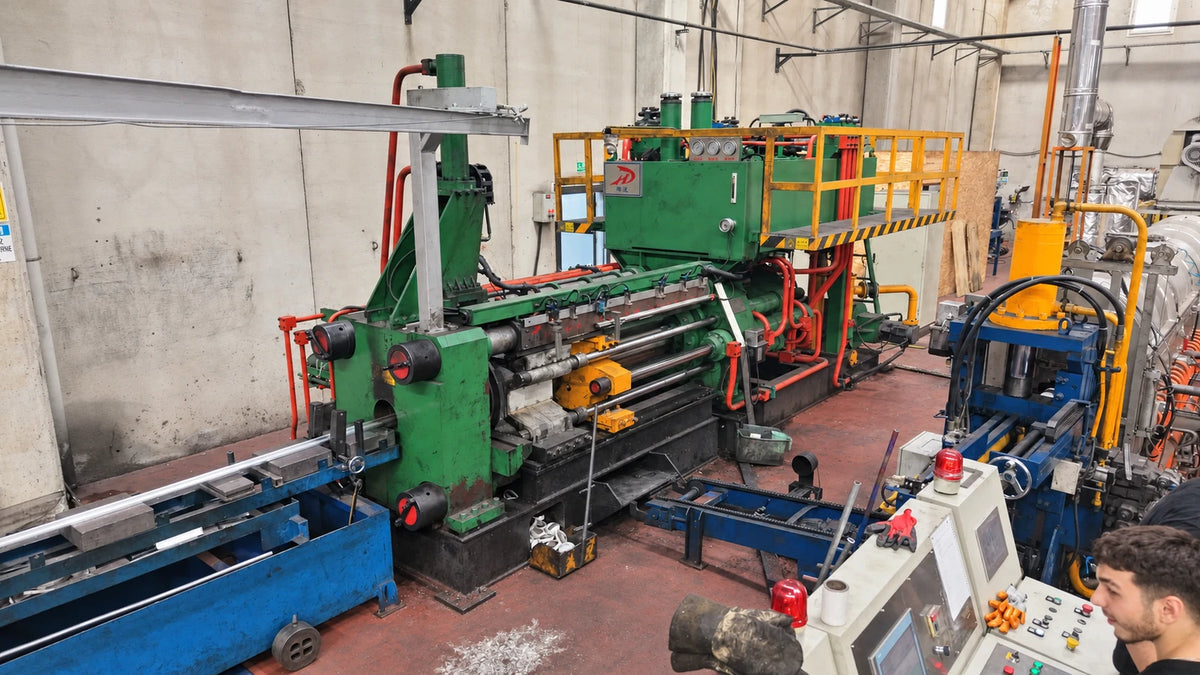
  2. Extrusion press line

    Extrusion is the main production stage in which aluminium is turned into the designed section. The billet, heated to the appropriate temperature, is pushed through the die under press pressure and takes the form of the profile. Our aim is to produce profiles to the specified dimensions with properties suitable for repeat production.

    Extrusion press line
    Extrusion press line

    Alloy selection and production preparation

    The alloy is selected by assessing the expected mechanical properties, the surface treatments and the service environment together. Before production starts, the profile section, the requested lengths, the quantity and the subsequent operations are taken into account.

    Controlled extrusion

    During extrusion, temperature, exit speed and material flow directly affect the profile’s geometry and surface quality. Process conditions are set to support even formation of the thin and thick areas of the section.

    Cooling and straightening

    Profiles leaving the press are cooled under the conditions required by the alloy and the target mechanical properties. Stretching and straightening are used to remove geometric deviations such as bow and twist.

    Cutting to length and mechanical properties

    Profiles are cut to the lengths specified in the order. In heat-treatable alloys, mechanical properties are improved by ageing. After length, section, straightness and surface checks, the profiles move on to the next stage.

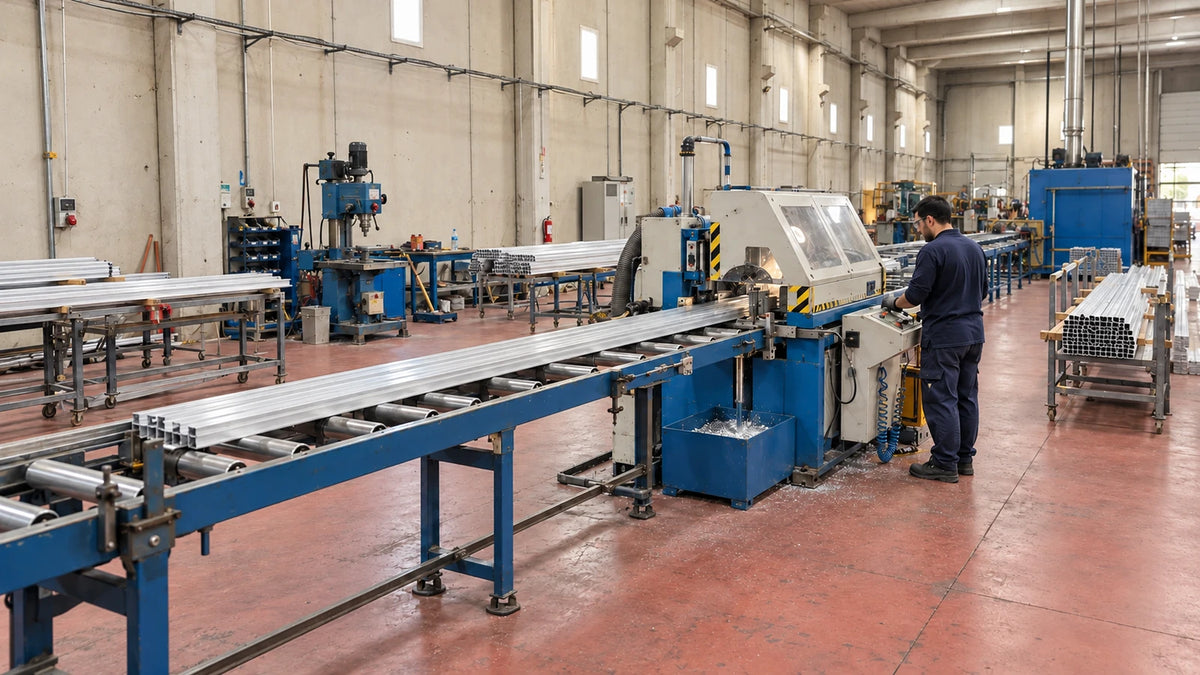
  3. Machining line

    Machining prepares the extruded profile to the dimensions and details of its end use. Length and angle cuts, connection details and other machining requests are planned from the technical drawing. Models that need serial punching on the flanges are routed to the eccentric press line.

    Machining line
    Machining line

    Process planning from the technical drawing

    The areas to be machined, reference dimensions and tolerances are agreed before production. For products that need more than one operation, the sequence is set by taking into account how the dimensions relate to one another.

    Length and angle cuts

    Cuts are planned according to the length and angle requirements in the technical drawing. Supporting the part properly, especially with thin-walled and open sections, helps reduce dimensional deviation and deformation.

    Connection and machining details

    Mounting and connection details are assessed according to the section and its purpose. Products that need a regular hole pattern on the flanges are processed separately on the eccentric press line with a suitable die.

    Final inspection and surface protection

    The machining sequence is set according to the surface finish and the conditions of end use. Finished parts are checked for length, hole positions, cut faces and overall form.

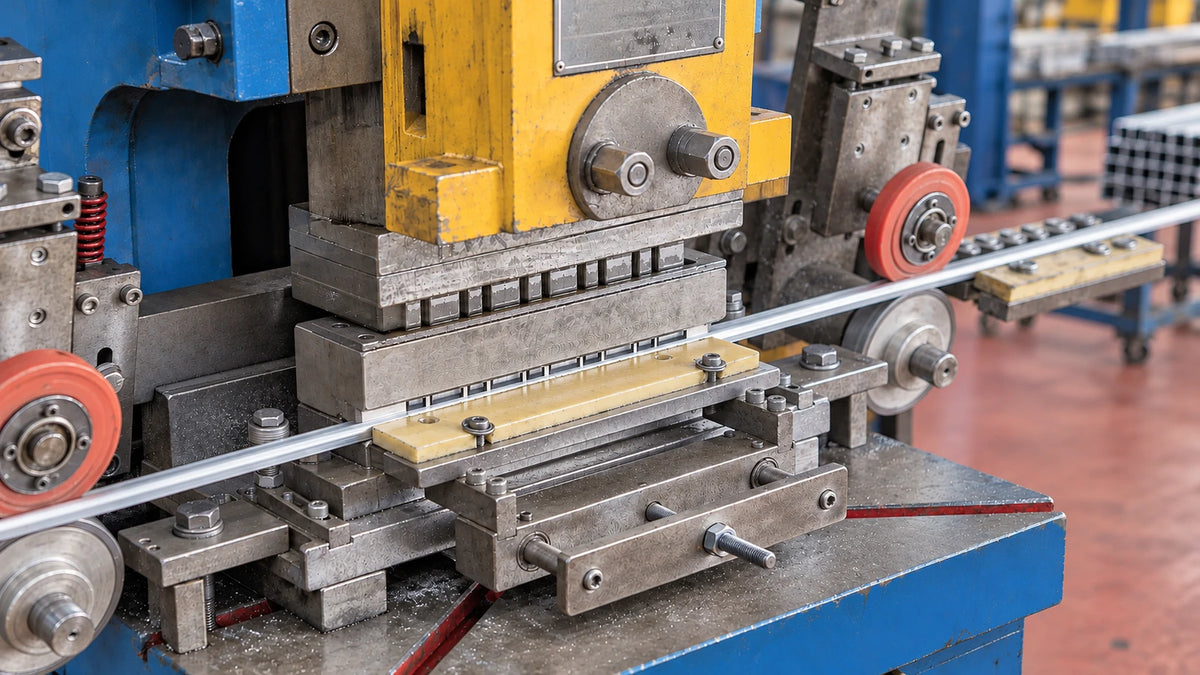
  4. Flange punching with an eccentric press

    We punch holes and openings that suit the product’s use in the flanges of flanged aluminium profiles. The profile is fed in a controlled way and punched with a punch and die set that suits the section.

    Flange punching with an eccentric press
    Flange punching with an eccentric press

    A punching die that suits the section

    The flange width, wall thickness and required hole shape are assessed together. The die and settings are chosen according to the geometry of the profile.

    Regular hole spacing

    The shape, position and pitch of the holes are planned for each model. Feed and alignment settings aim for a regular hole pattern along the profile.

    Keeping the profile shape

    The profile is guided with suitable guides and supports during the process. The feed is checked so that the flanges are not crushed or bent and the profile stays straight.

    Hole and burr check

    At the end, the size, position and edges of the holes are checked. Any deburring is completed and the profile is prepared for the next stage.

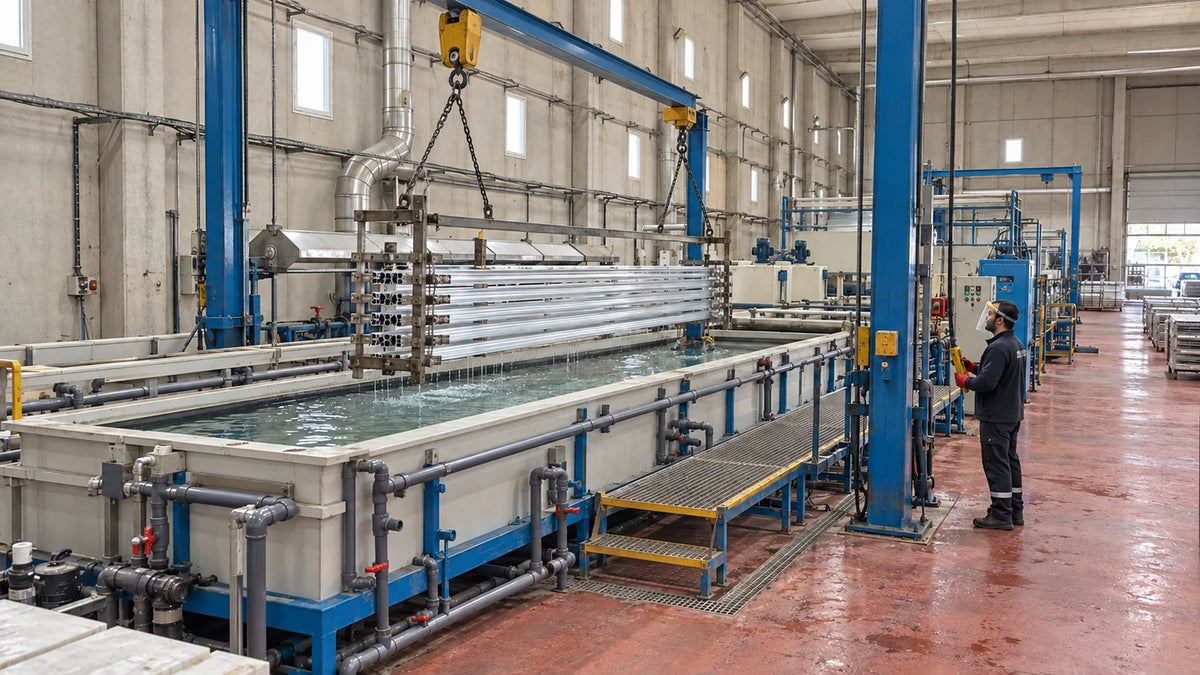
  5. Anodising line

    Anodising is an electrochemical process that forms a controlled oxide layer on the aluminium surface. This layer is integral to the metal itself and, under suitable conditions, increases corrosion and wear resistance while keeping the metallic appearance of the aluminium.

    Anodising line
    Anodising line

    Surface preparation

    Before anodising, the profile surface goes through cleaning and pre-treatment stages. Because anodising leaves the surface character of the underlying metal visible, the initial surface quality of the profile determines the final appearance.

    Controlled oxide layer

    The properties of the oxide layer are set according to the product’s conditions of use. Coating thickness, surface requirements and the technical function of the part are assessed together, and the effect of the coating on dimensions in fit and connection areas is taken into account.

    Colour and surface consistency

    Natural or coloured anodising options are considered in line with the required appearance and technical suitability. Because the alloy, surface preparation and process conditions can affect the final shade, the colour requirement is agreed on a sample.

    Sealing and final inspection

    The pores in the oxide layer are closed by sealing in line with the process plan. In the final inspection, appearance, colour match and coating properties are assessed, and the profiles are prepared for the next stage in packaging that protects their surfaces.

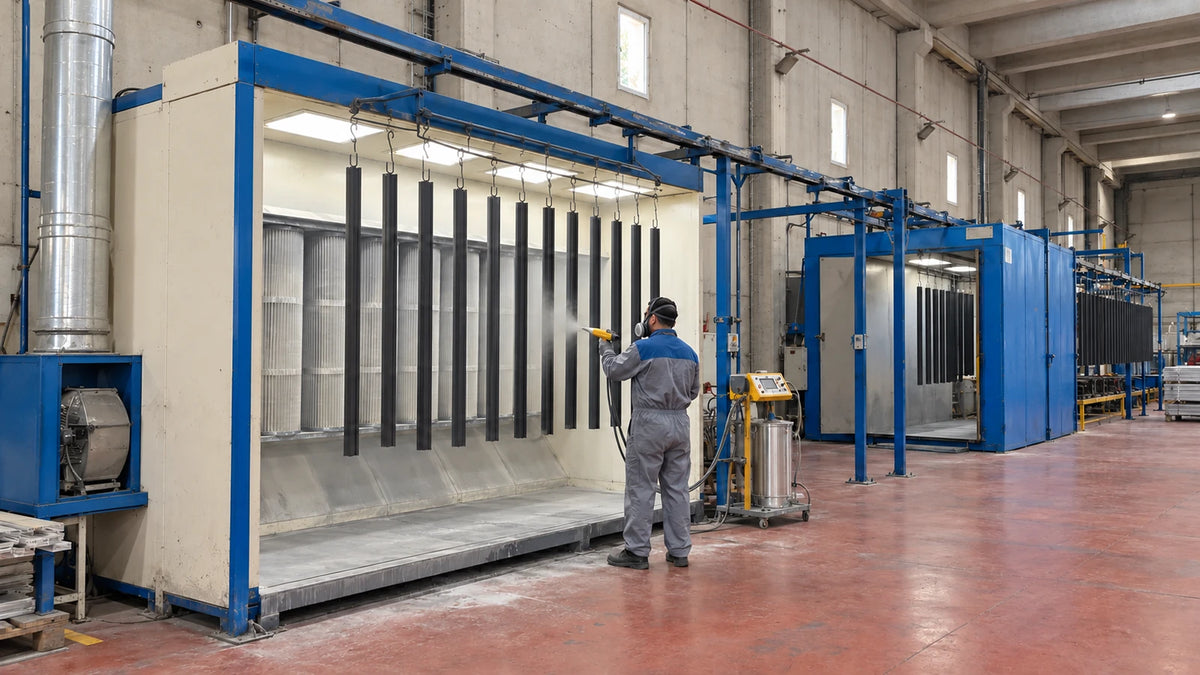
  6. Electrostatic powder coating plant

    Electrostatic powder coating is a coating method that gives aluminium profiles colour and surface texture. The powder particles are applied to the surface electrostatically and cured under suitable oven conditions to form the coating layer.

    Electrostatic powder coating plant
    Electrostatic powder coating plant

    Defining the colour and coating system

    Colour options are assessed according to RAL references and project requirements. In addition to the colour code, the gloss level, surface texture and whether the product will be used indoors or outdoors are also agreed.

    Surface preparation before coating

    Removing oil, dirt and unsuitable residues from the surface is the basis of powder coating. After pre-treatment the profiles are rinsed and dried. This preparation supports coating adhesion and performance.

    Electrostatic application and curing

    The powder adheres to the surface through electrostatic charge, and the corners, channels and recesses of the section are assessed for coating distribution. The profiles are cured at the temperature and for the time required by the powder’s technical specification.

    Surface inspection and match between parts

    Coated profiles are assessed for appearance, colour, gloss and coating uniformity. In fit and assembly areas, the effect of coating thickness on functional dimensions is taken into account, and colour, texture and gloss details are kept for repeat orders.

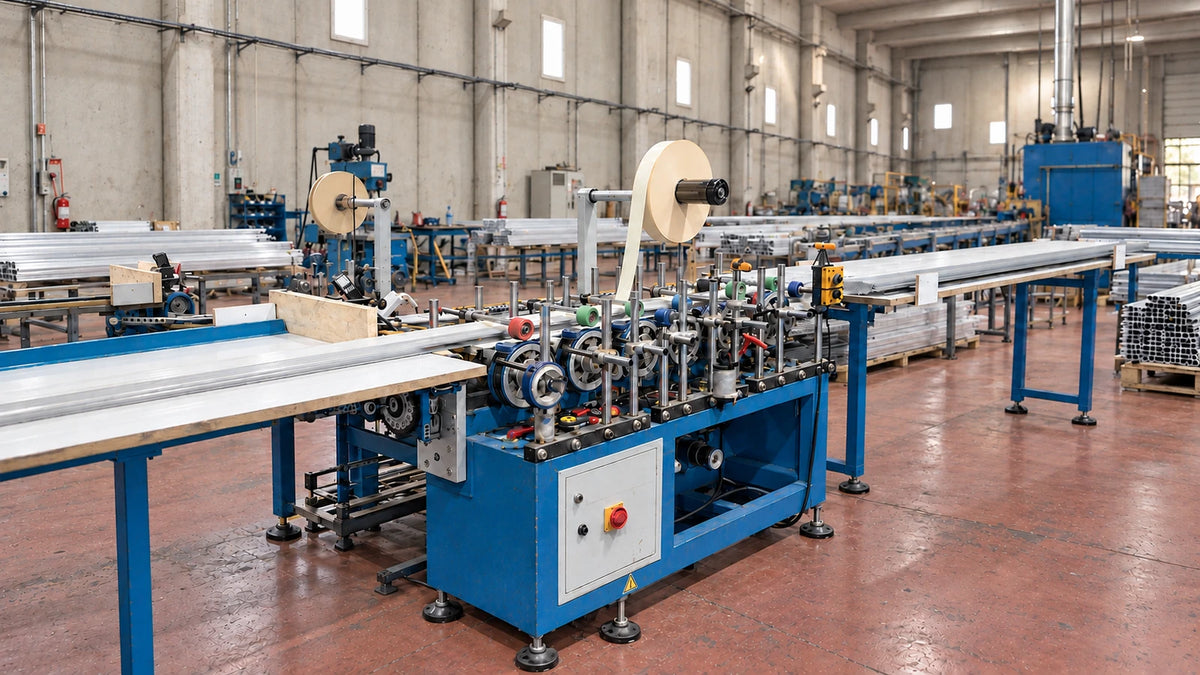
  7. Surface protection and adhesive taping

    Depending on their use, we prepare profiles with a protective surface film or an adhesive tape that helps installation. The tape type, width and the surface it goes on are chosen according to the profile’s finish and use.

    Surface protection and adhesive taping
    Surface protection and adhesive taping

    Protective surface film

    A film is applied to help protect the decorative surface against abrasion during transport, storage and installation. Its adhesion and peel properties are chosen to suit the profile’s finish.

    Adhesive tape for mounting

    On models designed for taped mounting, adhesive or double-sided tape is applied to the relevant surface. The choice depends on the profile’s finish, the surface it will be bonded to and the application conditions.

    Clean surface, even application

    The application surface is kept clean and dry. As the profile moves between the guides, rollers press the tape evenly onto the surface along the set line.

    Tape alignment and surface check

    The tape width, position and contact are checked. Wrinkles, overhang at the edges and loose areas are assessed, and the profile is prepared for packing.

  8. Single-profile shrink wrapping

    Each profile passes through the machine on its own and is wrapped in film. Wrapping profiles individually helps reduce direct contact with other parts during storage and transport.

    Single-profile shrink wrapping
    Single-profile shrink wrapping

    Fed one by one

    Every part, including small sections, is fed into the machine separately. Infeed and outfeed supports keep the profile moving smoothly and straight.

    Film application that suits the section

    Film and machine settings are assessed according to the profile’s section, length and surface. The aim is an even wrap around each single profile.

    Film and end check

    The wrap is checked for integrity, slack or tears, and the ends are inspected. The need for extra protection at points that may be sensitive in transport is assessed.

    Preparing for shipping

    Individually wrapped profiles are counted and grouped by order. Once outer packing and labelling are complete, they are arranged for shipping.

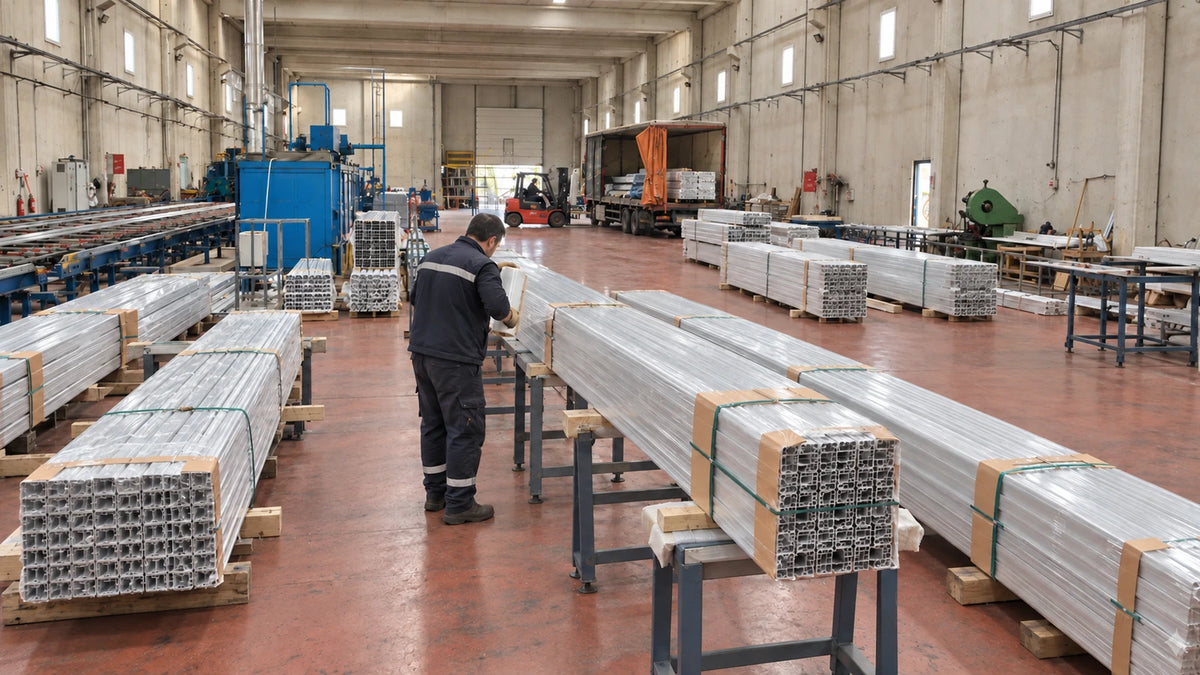
  9. Packaging and dispatch

    Packaging and dispatch are planned so that the product properties achieved in production are preserved until the goods reach the customer. The length, section structure and surface finish of the profiles are important in deciding on suitable packaging.

    Packaging and dispatch
    Packaging and dispatch

    Order check before dispatch

    Products are compared with the order for profile type, length, colour, surface treatment and quantity. In shipments containing different products, items are grouped to reduce the risk of mix-ups.

    Surface protection suited to the product

    The protective material and packing arrangement are chosen according to the profile’s surface properties. For anodised and powder-coated surfaces, the compatibility of the packaging material with the finish is important.

    Pack arrangement and labelling

    The weight, length and handling method of the packs are considered together. Products are labelled using order details such as profile code, length, colour and quantity.

    Dispatch planning and loading

    Dispatch is planned according to the delivery address, the transport method and when the order will be ready. Requests for part deliveries or special packaging are agreed during order planning.

Quality control and production planning

Our approach to quality

We treat quality as part of every stage of production, from reviewing the technical drawing to preparing shipments. Dimensional accuracy, the expected surface and fitness for use are our priorities in the first order and in repeat production.

Criteria monitored during production

Section dimensions, wall thickness, length, straightness and surface appearance are assessed for each product. On coated products the colour and surface are checked; on machined parts the holes, connections and post-machining shape. On taped and wrapped products, the quality of application is inspected too.

Production flow shaped by the product

Not every profile goes through the same processes. Anodising and powder coating are alternative surface options for most products. Whether machining and punching are done before or after coating, and whether taping and individual wrapping are needed, is planned according to the product’s technical requirements.

Custom profile and volume production requests

Share your technical drawing, the application, the length and quantity you need and, if any, your alloy and surface expectations. Let us plan the die, machining, surface treatment and delivery together according to your order.

Products and contact

Products

Which profile are you looking for?

Browse LED, PVC wall panel, plasterboard and skirting profiles.

Cart

Your cart is empty.

Browse products